• Please note that there are a few updates and clarifications made in the Audiokarma Rules, mostly relating to advertising and the addition of the new "Paying it Forward" & "Giving back" forums in the AudioKarma Audio Marketplace section.

Luxman LV-105u hybrid integrated amp (w/ pics)

Gigapod

Vintage audio amateur
Hi,
I spent my Sunday cleaning up this amp and preparing for its future repairs, so I thought I would post some pics:

Family pic with LV-111 and T-111L:

family_1_small.jpg


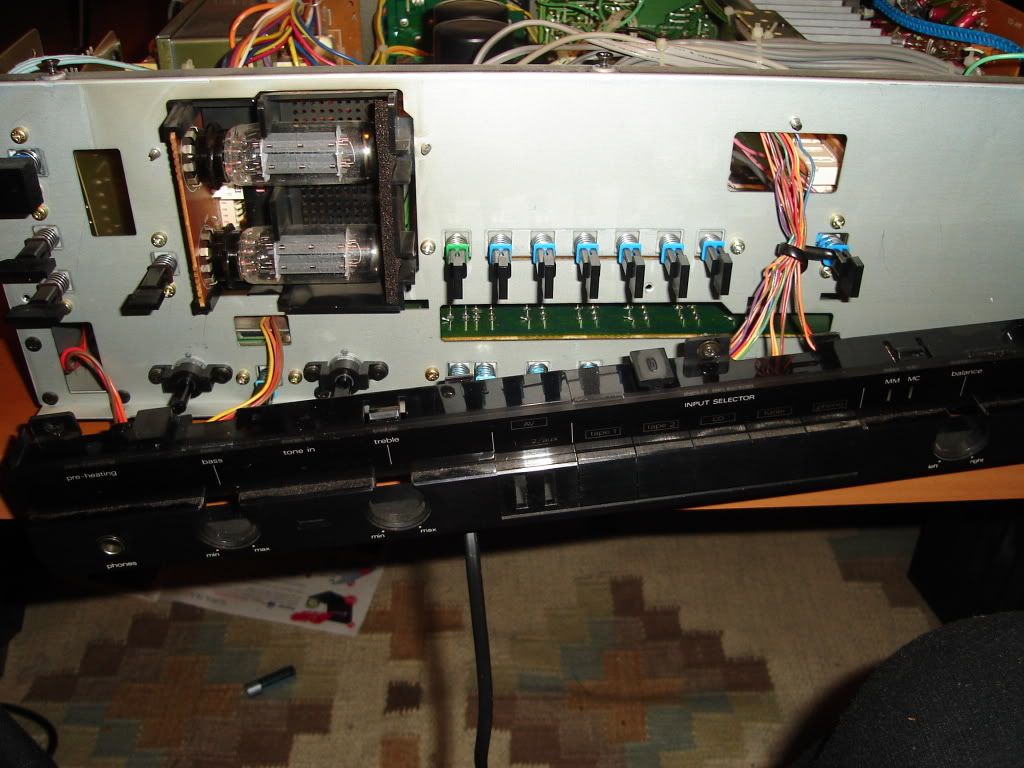
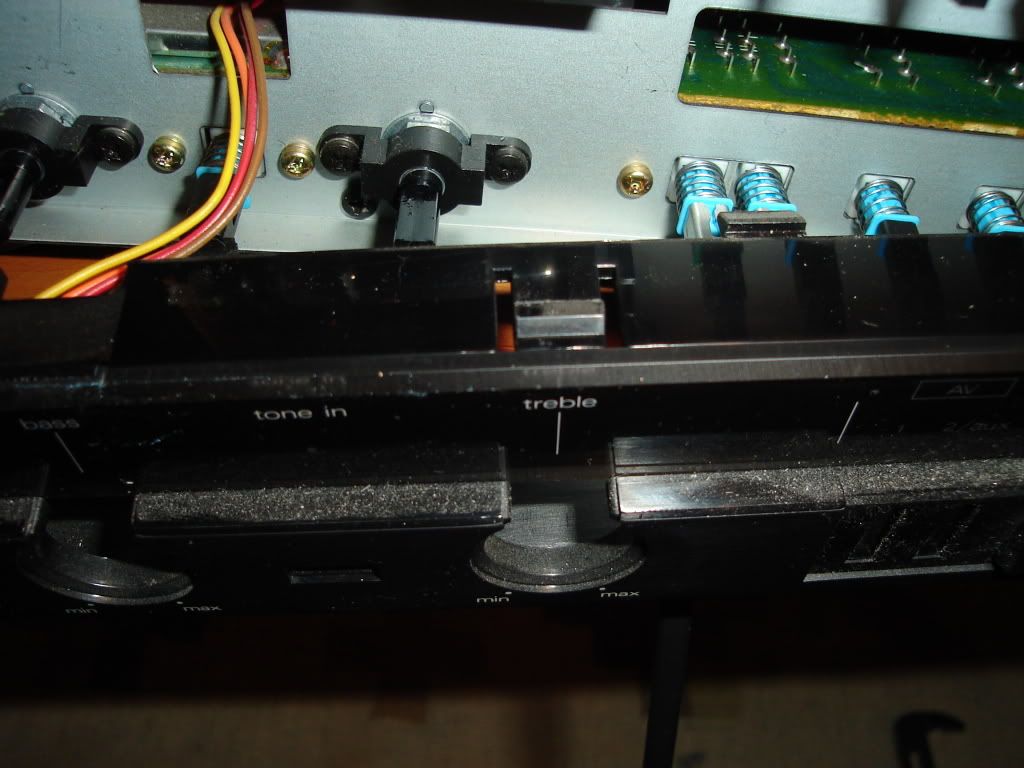
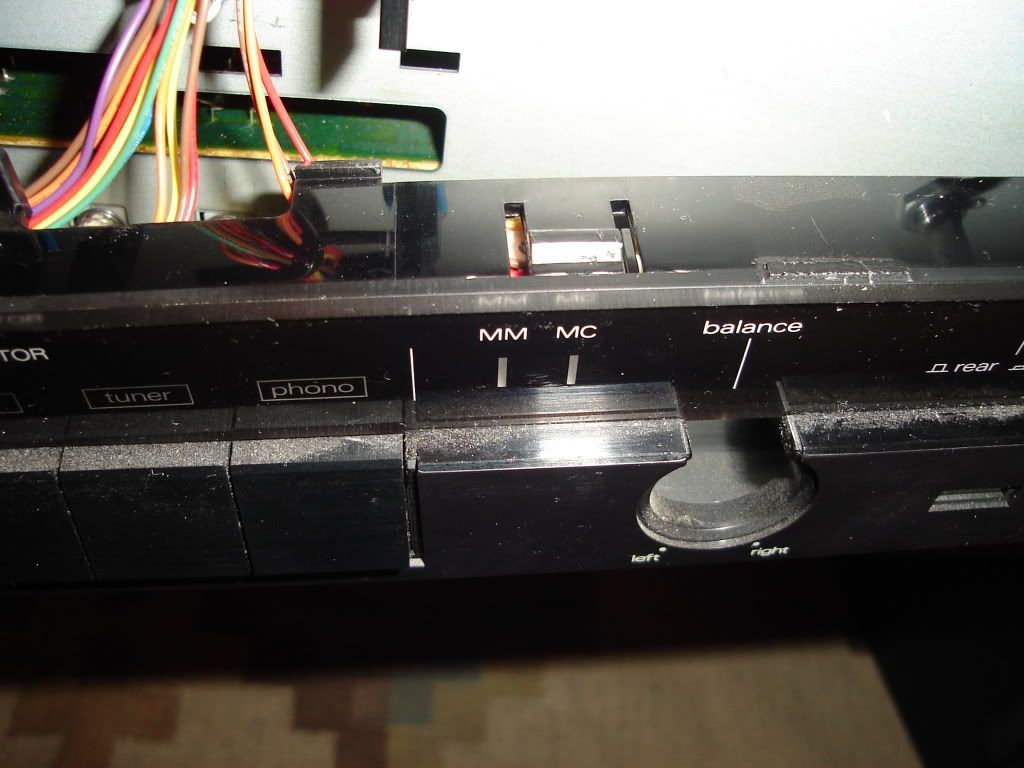
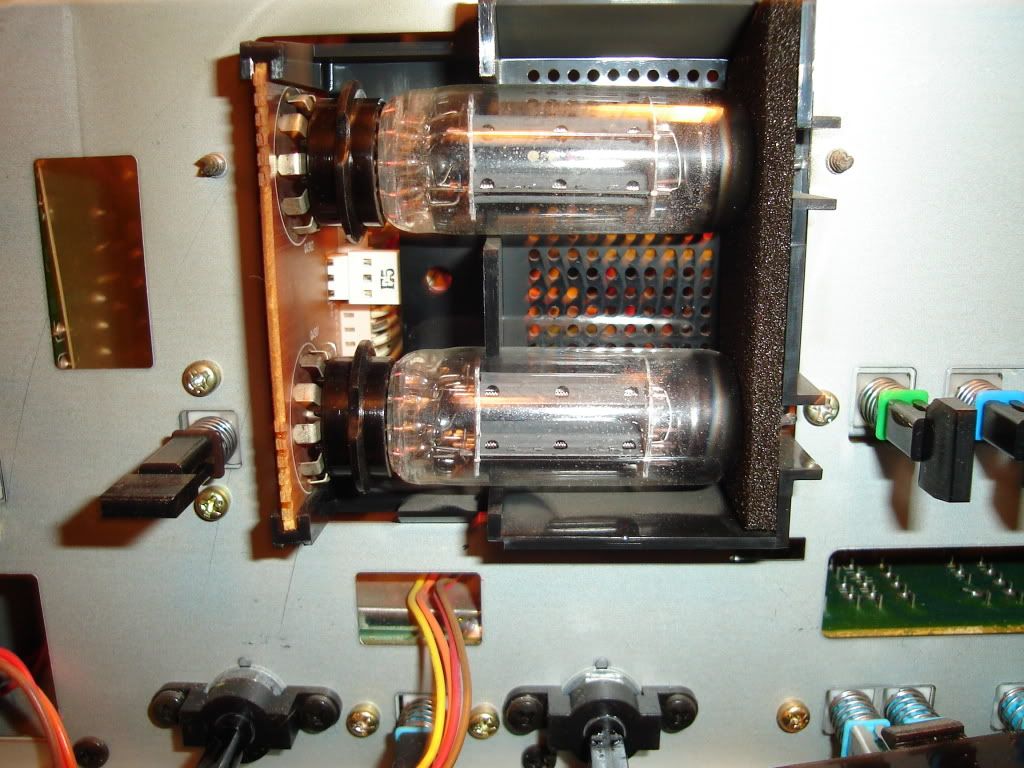
Front nudie, the pair of tubes is 2 x 6CG7; these are easy to come by on the bidding site:

front_nudie_1.jpg


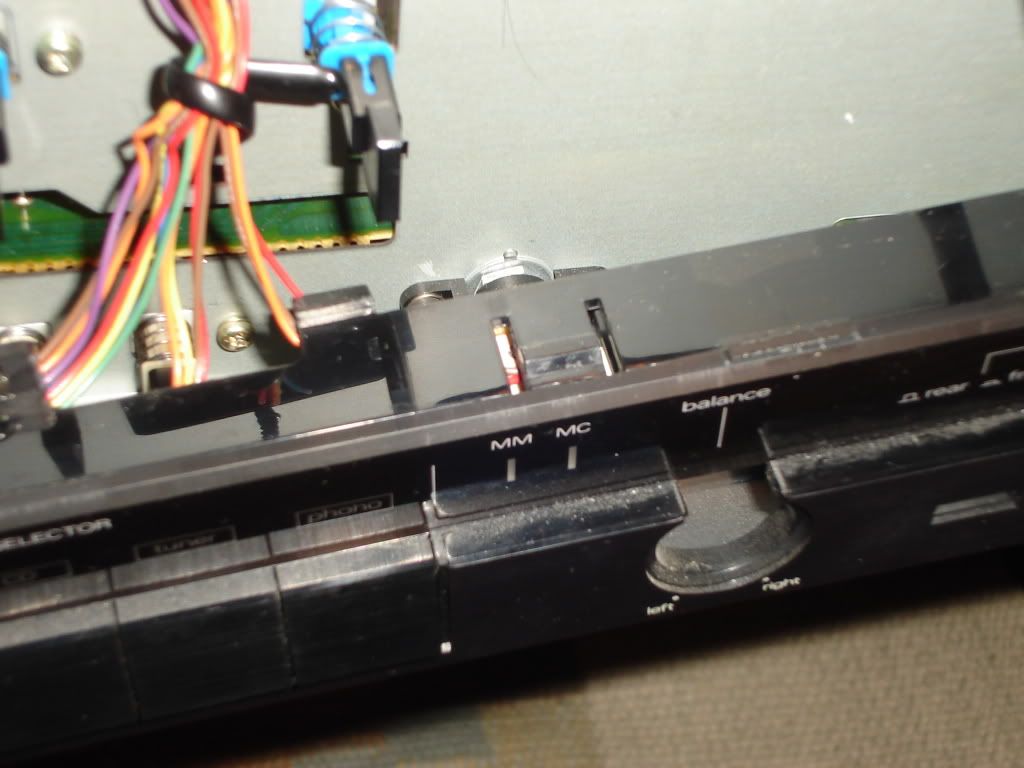
Back nudie:

back_nudie_1.jpg


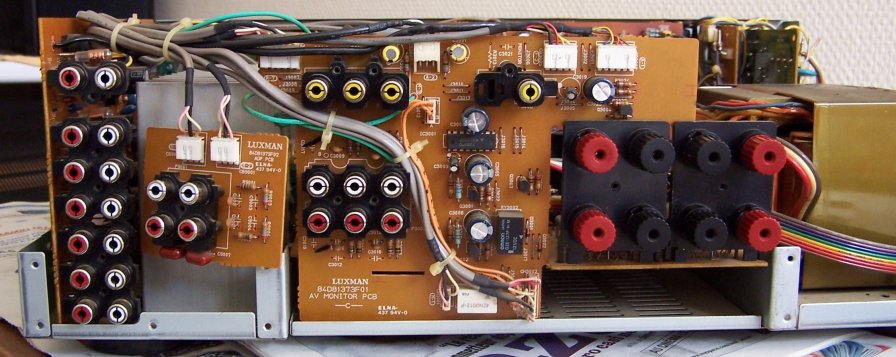
Back:
back_1.jpg


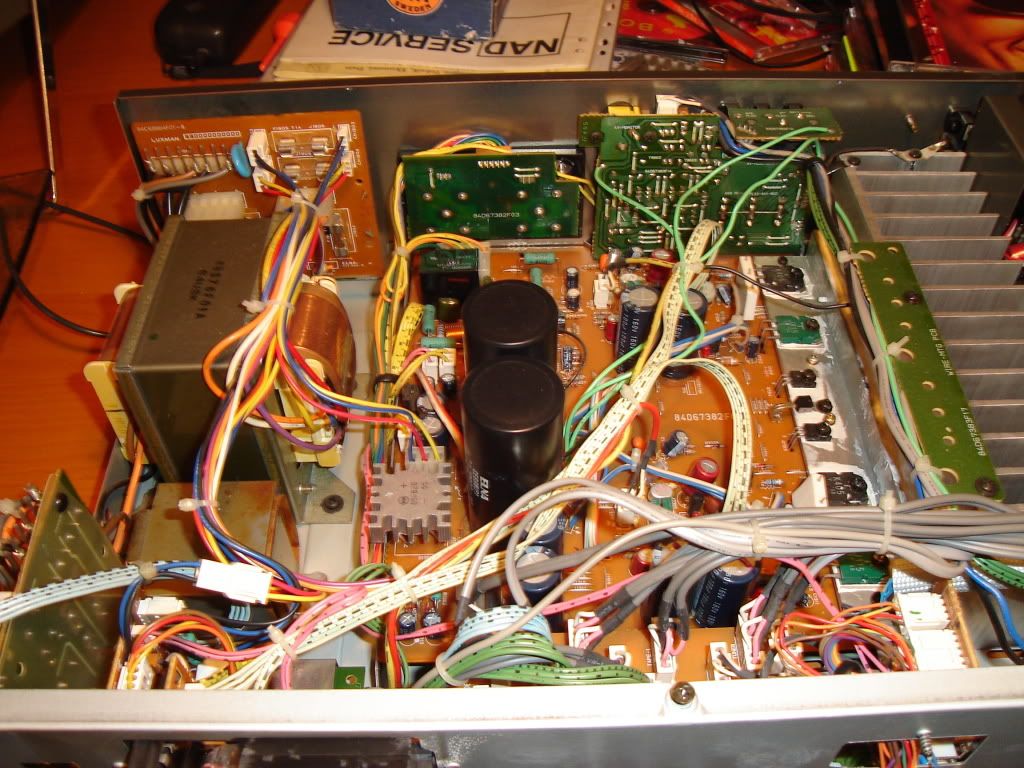
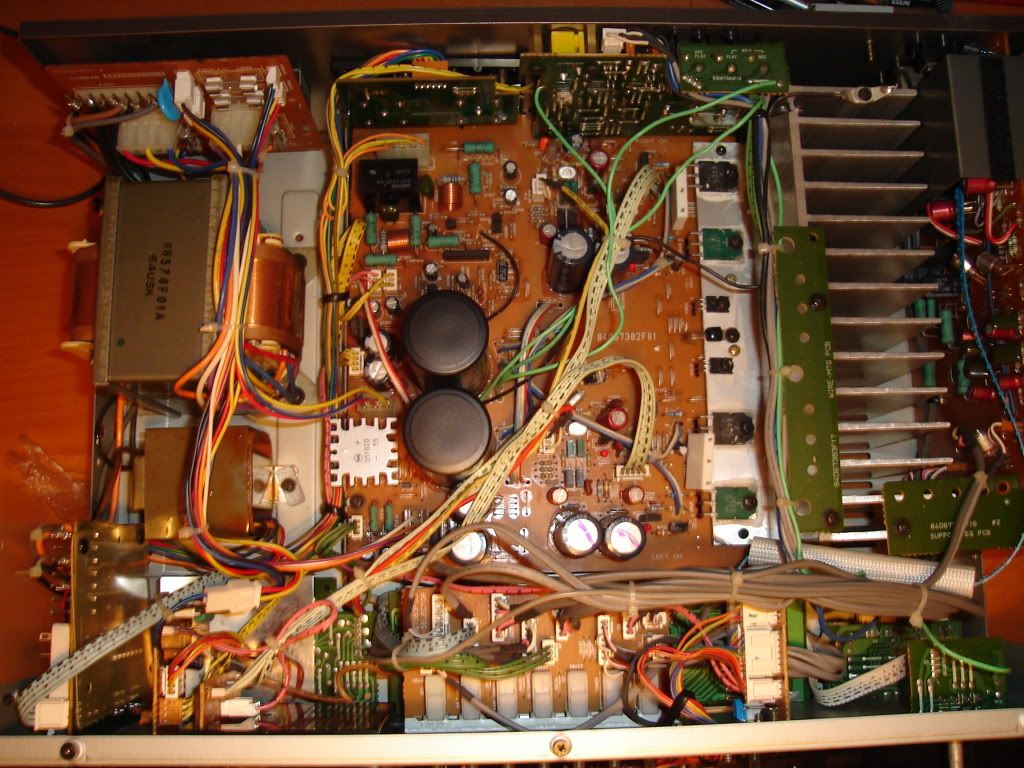
Inside:

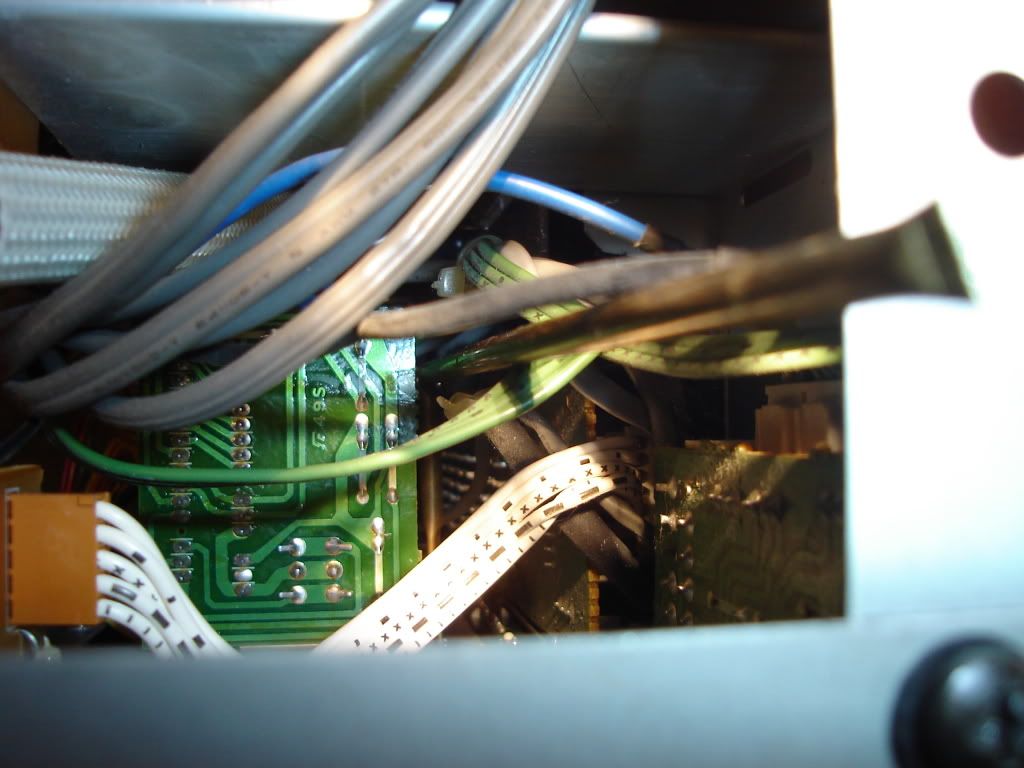
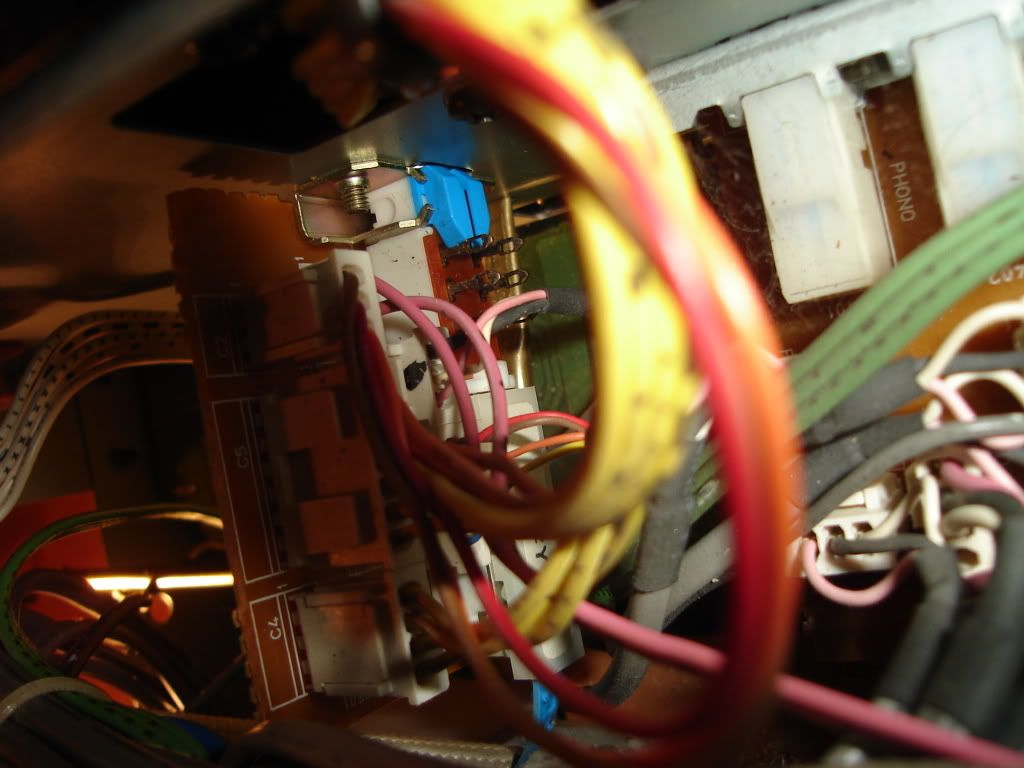
nudie_1.jpg


A couple of MOSFET power transistors are missing on the main PC board and I suspect both channels are dead. I am taking the slow route to repair this amp because it has already been mishandled by the previous owner, but aesthetically it was in rather good shape under a thick layer of dust and dirt. At least it's relatively clean now.
 
Register to hide this ad
I have got a similar amplifier and need to repair the tone control button. However i have problems removing the front panel to get to it. Do you have any hints?
 
Very nice! :yes: I owned one of those in the early eighties. I was quite pleased with it at the time and for the money it did quite well driving a pair of Magnepan 1.0's with input from my Michelle GyroDec. Good luck on your project. :D

:music:
 
LV105u vs LV105

Thank you for your nude pictures, really sexy :thmbsp:

I found this thread, while googling for LV105 pictures.

Just wanted to add some nude pictures of my own LV105 non "u" - bit different, but that really pesky front in aluminium and plastic is the same.

DSC02060.jpg


You have to use brute violence to remove it.
It is only the 3 screws on top, and 2 hidden latches on the bottom, holding it all in place.

DSC02066.jpg


DSC02052.jpg


DSC02058.jpg


DSC02059.jpg


On the LV105, the tubecage is easy removed, and 1 latch can be pressed down thru the opening, taking care not to damage the tube window.

The other one may be acessed, when prying out the other side, and depressed with a screwdriver.

The whole thing is kept in line with guides, so any offset pulling is difficult.

DSC02070.jpg


DSC02071.jpg


Picture of the USA made GE tubes in their cage.

DSC02073.jpg


This example was found in Norway, and I am now bringing it up to scratch.

I really like the tube(y) sound of this amp, it is very transparent and demanding of the source.

The RIAA amp is a very large PCB, on the right hand side, standing upright next to the coolingfins.

Listening to a good 33,3 LP with an Yamaha MC 9 cartridge, I will hear a large 3d soundstage, tube middle and top, and a deep bass.

It is very suited to large JBL speakers, using a pair of L7´s for the moment.

Hope my pictures will be to some use to future renovations of this wonderful sounding amp.

/SWIN
 

Attachments

  • DSC02052.jpg
    DSC02052.jpg
    57.7 KB · Views: 190
  • DSC02058.jpg
    DSC02058.jpg
    65.4 KB · Views: 142
  • DSC02059.jpg
    DSC02059.jpg
    63.9 KB · Views: 126
  • DSC02060.jpg
    DSC02060.jpg
    84.5 KB · Views: 128
  • DSC02066.jpg
    DSC02066.jpg
    62.8 KB · Views: 133
  • DSC02073.jpg
    DSC02073.jpg
    95.8 KB · Views: 150
  • DSC02071.jpg
    DSC02071.jpg
    119.5 KB · Views: 161
  • DSC02070.jpg
    DSC02070.jpg
    123.9 KB · Views: 154
I'm a huge fan of these mid-late 1980s Luxman amps. They don't look like much at first glance, which is great, since it keeps the prices relatively low.

I'm still trying to figure out what the hell is wrong with the digital-to-analog section on my LV-117. No dice.
 
There must be an easier way to do this - I think!

There must be an easier way to do this - I think! ("People are funnier than anybody" - Spike Jones)

After re-tubing the Luxman 105 above with real "CG" class quality tubes, the sound improved immensely.
The (really) old tubes sounded weedy and thin, the new ones opened up the treble and improved sound over the whole range, and a much beefier, detailed sound emerged.
So, choose only top notch tubes, it really pays.

This amp really like big JBL speakers, listening to a JBL L7 biamped using a LV 105 for the top, a really crappy sounding Pioneer A-777 for the bass.
Sources vary, but for digital usually a Crystal CS 4328 direct coupled with 51 ohm // 110 nF on the output.
And vinyl sounds excellent due to the very good quality RIIA with Stanton 881s and Yamaha MC9 & MC11 cartridges.

As i have 2 of these amplifiers, and wanted to continue with the re-tubing of the next one, I was faced with a 2 hour struggle to get the faceplate off.
But, careful study of the first amp revealed some interesting features.
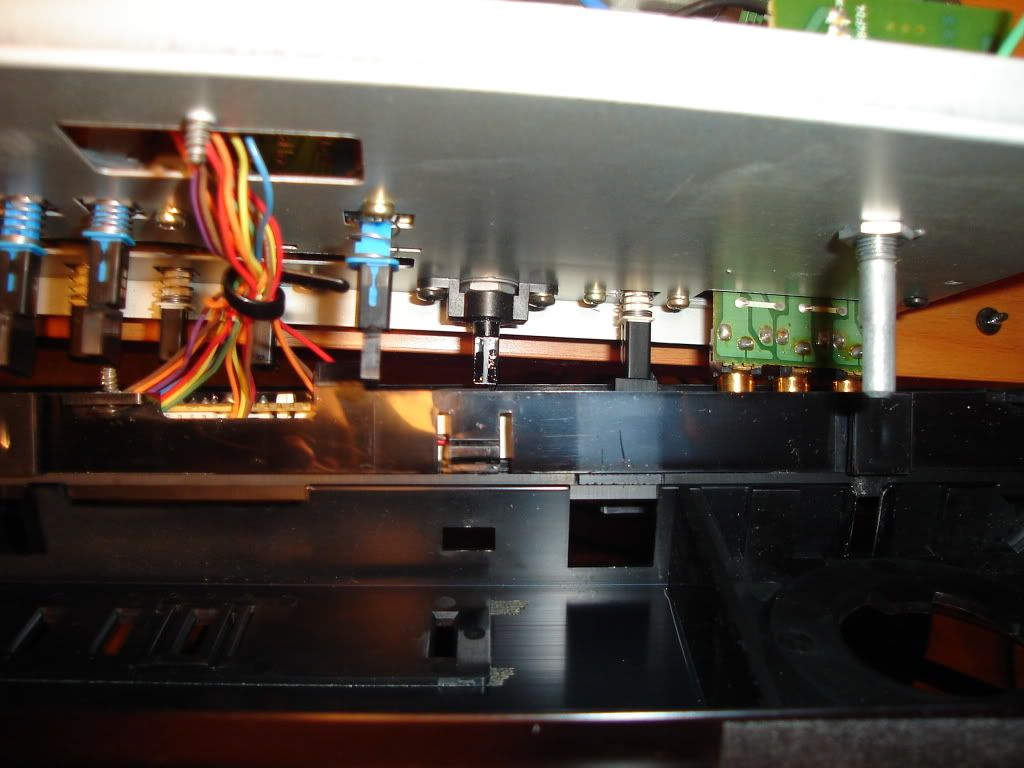
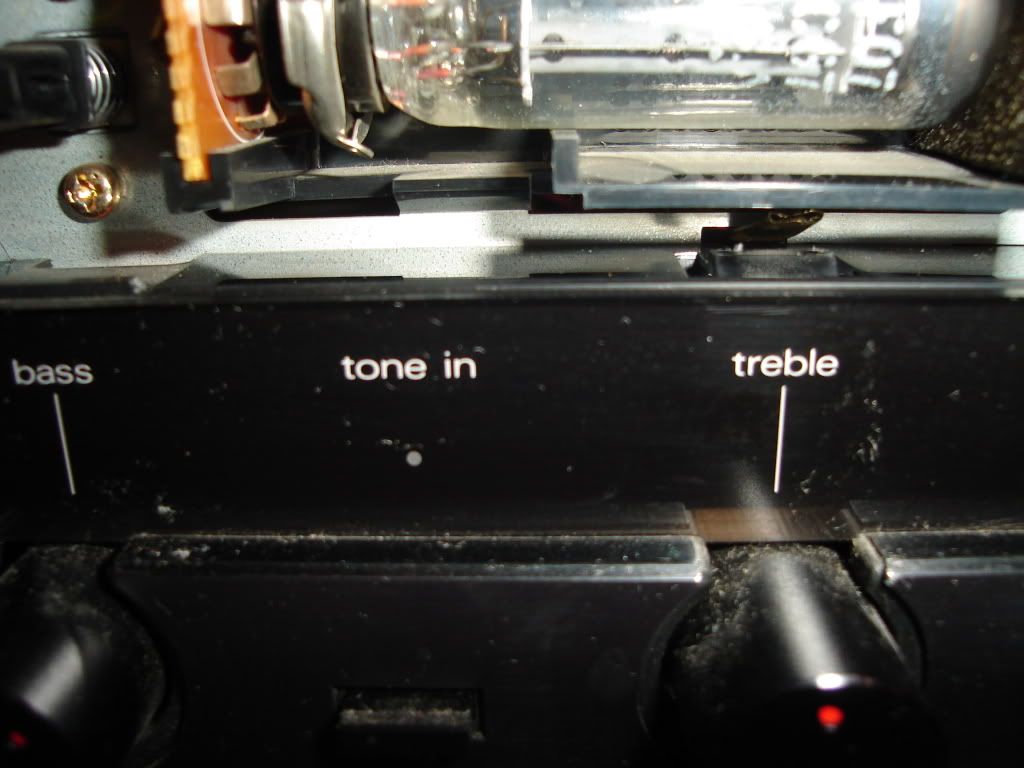
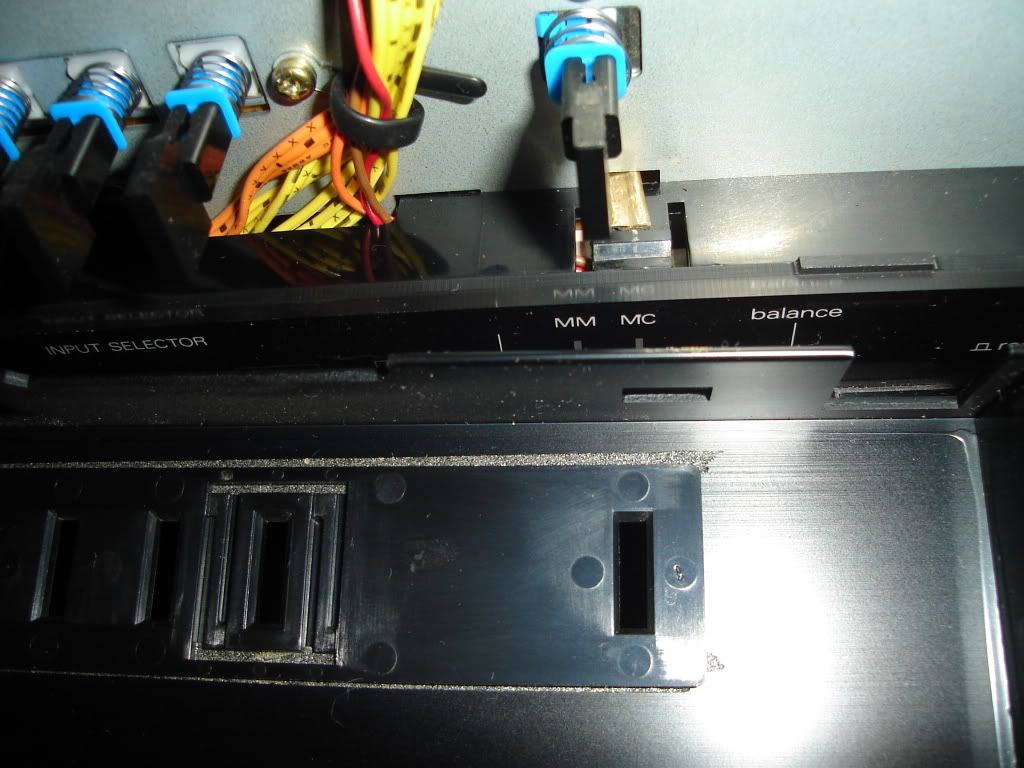
There are 2 slots over the latches, where you can push the latches down from the inside, for speedy and easy removal.

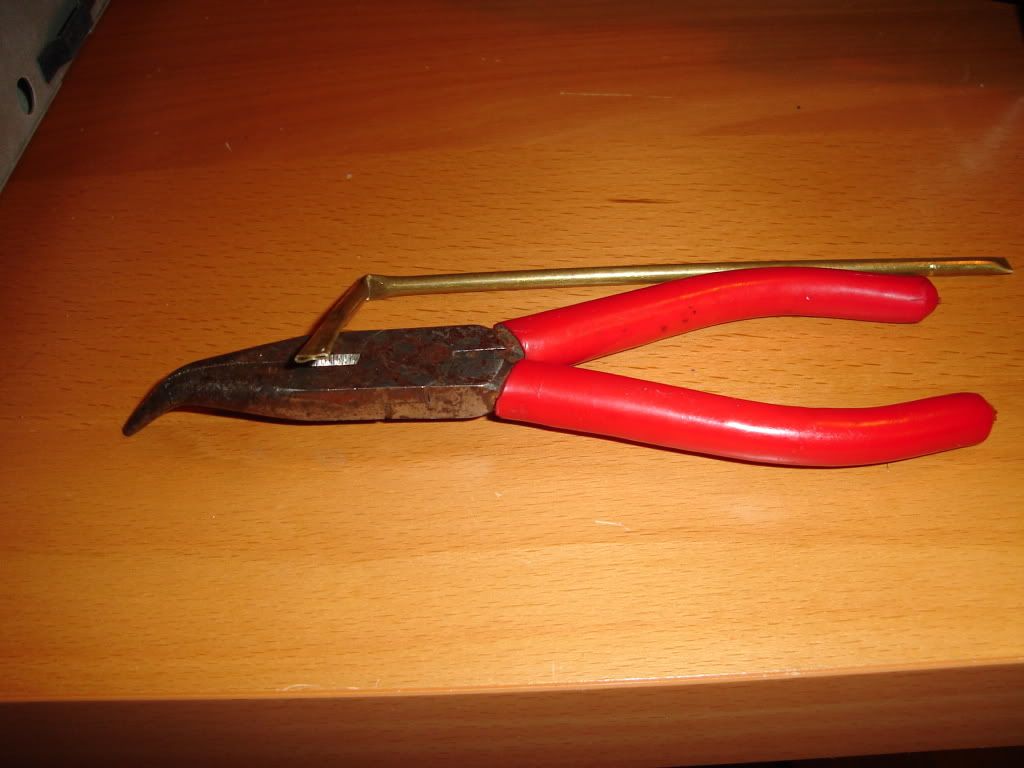
Righthandtool.jpg

Tool made of brass rod for the right hand.

Lefthandtool.jpg

Tool for the right hand.

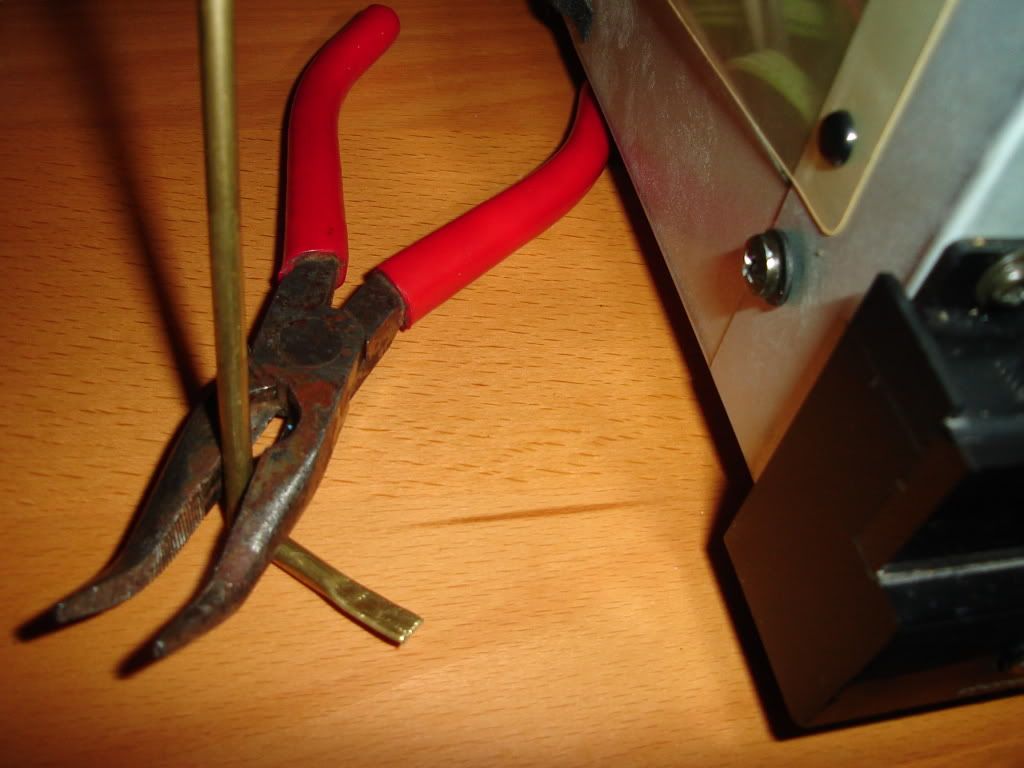
Lefthandtoolinserted.jpg

Left hand tool inserted in slot below the tube cage.

Lefthandtoolpokingout.jpg

Left hand tool poking out below tubes after faceplate removal.

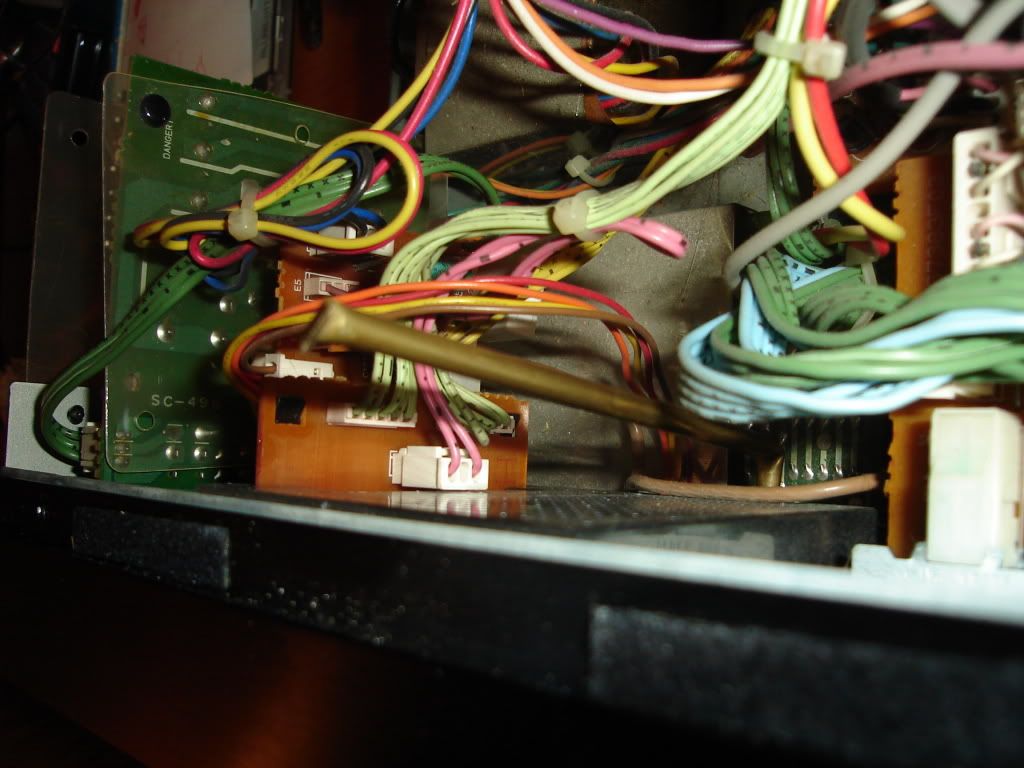
Righthandtoolinserted.jpg

Right hand tool inserted from the side.

Righthandtoolfromabove.jpg

Right hand tool in slot just below blue switch.

Righthandtoolpokingout.jpg

Right hand tool poking out after removal of faceplate.

And after inserting the tools, the faceplate just slid out, nice and easy.

Hope this will help others, you really think you are going to break something, when removing the faceplate by brute force.
 

Attachments

  • Left hand tool inserted.jpg
    Left hand tool inserted.jpg
    75.7 KB · Views: 102
  • Left hand tool poking out.jpg
    Left hand tool poking out.jpg
    60.9 KB · Views: 83
  • Left hand tool.jpg
    Left hand tool.jpg
    61.9 KB · Views: 74
  • Right hand tool from above.jpg
    Right hand tool from above.jpg
    64.1 KB · Views: 74
  • Right hand tool inserted.jpg
    Right hand tool inserted.jpg
    65.3 KB · Views: 78
  • Right hand tool poking out.jpg
    Right hand tool poking out.jpg
    74.5 KB · Views: 74
  • Right hand tool.jpg
    Right hand tool.jpg
    59.6 KB · Views: 67
There must be an easier way to do this - I think! ("People are funnier than anybody" - Spike Jones)

After re-tubing the Luxman 105 above with real "CG" class quality tubes, the sound improved immensely.
The (really) old tubes sounded weedy and thin, the new ones opened up the treble and improved sound over the whole range, and a much beefier, detailed sound emerged.
So, choose only top notch tubes, it really pays.

This amp really like big JBL speakers, listening to a JBL L7 biamped using a LV 105 for the top, a really crappy sounding Pioneer A-777 for the bass.
Sources vary, but for digital usually a Crystal CS 4328 direct coupled with 51 ohm // 110 nF on the output.
And vinyl sounds excellent due to the very good quality RIIA with Stanton 881s and Yamaha MC9 & MC11 cartridges.

As i have 2 of these amplifiers, and wanted to continue with the re-tubing of the next one, I was faced with a 2 hour struggle to get the faceplate off.
But, careful study of the first amp revealed some interesting features.
There are 2 slots over the latches, where you can push the latches down from the inside, for speedy and easy removal.

Righthandtool.jpg

Tool made of brass rod for the right hand.

Lefthandtool.jpg

Tool for the right hand.

Lefthandtoolinserted.jpg

Left hand tool inserted in slot below the tube cage.

Lefthandtoolpokingout.jpg

Left hand tool poking out below tubes after faceplate removal.

Righthandtoolinserted.jpg

Right hand tool inserted from the side.

Righthandtoolfromabove.jpg

Right hand tool in slot just below blue switch.

Righthandtoolpokingout.jpg

Right hand tool poking out after removal of faceplate.

And after inserting the tools, the faceplate just slid out, nice and easy.

Hope this will help others, you really think you are going to break something, when removing the faceplate by brute force.
hi Swin, not really clear how to replace the tubes; the amp has two faceplates, an upper and a lower; do you have to remove both to get to the tubecage? assuming you only remove the upper, how do you effectively replace the tubes - do you have to unfasten the tube pcb? Thanks!
 
When i´m cleaning windows! (George Formby, of cause - not Bill Gates:)

You really do not have to remove the front top faceplate, to access the tube cage.
It is possible to pry the tubecage out, with the front i place, from the top of the plastic cage.

Please tell me, and I will post a picture!

/SWIN
 
Tube brand and frontplate

Hi all
I registred just for the ability to comment on this thread :thmbsp:
Nice pictures from gigapod and SWIN. :yes:

I just got a faulty LV-105u last week and have allready repaired the bad endstage with other Fet's then the original. I have posted about that in the DIY Audio forum. Same alias as here.
I would like to thank SWIN for the hint on the slots to easier get the upper faceplate off. You need to do that to be able to clean the inside of the tubes window. But you don't need it to be able to get the cage with the tubes out. For that you need to move the driver board and lose the two screws that fix the tube cage to the steel front.

@SWIN
What brand is "real "CG" class quality tubes" ?

And maybe someone has answers on these two Q.
  • Does every brand of 6CG7 have the peculiar "lightbulb look". I mean with the filament visible between the two triodes in the top of the tubes?
  • Does anyone know which brand there was from the beginning when it was sold? Was it GE ? My tubes are cleaned so only the etched type and U.S.A are visible.
My tubes measures very good on my tubetester ftm. so I don't need to change right now but I would like to gather some spare samples for the future.
 
The tube type started with 6CG7, a type derived from the 6SN7GT tube.

A cheaper derivate of the 6CG7, that was made for mass production, and used in TV sets, was the 6FQ7.

I use 6CG7´s labeled Tungsram for the moment, but I think they are made by RCA.

IMHO I think that the older "CG" types are more suited to audio use - and I have a lot of CG and FQ´s to compare with.

/SWIN
 
Be sure to re-solder all the joints on the tube boards, including the connecotrs, these do go intermittent because of the heat generated by the tubes.
Replacement MOSFETs should be Toshiba 2SJ200 or 2SJ201 and 2SK1529 or 2SK1530. The cases are a bit bigger but they fit, and you get extra current capability, especially in the case of the 2SJ201/2SK1530. In a pinch you might be able to use IRFP240 and 9240 although IRFP340 and 9240 will make a better pair. In both cases the bias generator has to be modified for the larger treshold voltage of the IRFP parts, but in the end the amp will work quite well with them. The 2SJ/2SK parts need no changes as they are actually derived from the originals. It is better not to attempt finding the original parts as there are loads of fakes around, and they were a bit under-dimensioned, perhaps with the exception of the LV-103 which is lower power.
 
Hi SWIN
Do all those brand of tubes look the same regarding the filament visible between the two triodes in the top of the tubes?
 
@ilimzn

I did the IRFP340/9240 route with changed bias resistor (R7302 on the right channel) to 4.7k.
They are more easy and also cheaper to come by.

I can't find 2SJ200 or 2SJ201 and 2SK1529 or 2SK1530 at any of the places I use to by from. Elfa, Farnell, Digikey or Mouser.

The IRFP parts gives a larger difference in Bias measurings between 3 minutes and 30 minutes settling time. Apart from that they work very well. I will measure with scope and FFT later on to see if I can measure any disimiliarities between the original channel and the restored modified with IRFP devices.
The LV-107U manual suggests much lower bias then the 105u service manual.
LV105U suggests 65mV between R7317 and 7318 after 5 minutes.
LV107U suggests 45mV after 3 minutes (which gives really low values after 30 minutes warm up time)
I settled for 50mV after 30 minutes. I will later on finetune and THD check to see how much influence it has on crossover distortion.

C1210 filter Cap near the bridge for the filaments to the tubes was without any value at all on my unit. I put a 8200uF in place of the original 6800uF.

I also resoldered the driver boards connectors and the two Current stabilizers Q7107 and Q7108. I also put cooling fins on those two transistors which are very hot under normal use. The pertinax PCB was dark brown in those places.
 
Yes, this is common practice but as you see, too late - they should have put them on in the factory. Also, put a heatsink on the filament bridge, it gets very hot. I routinely replaced them on all 4 LV10x I worked on, with KBPC 8A parts, leaving the pins as long as possible. The bridges heat up because of very large peak currents, a common problem with a huge power transformer driving a low voltage rectified power supply. It is possible to aleviate this problem by putting a small value high wattage resistor in series with the filament winding. The vaue should be optimized sop that the filament supply regulator still has enough voltage to work with. I did this only on the last unit i serviced, IIRC I used 1 ohm, one of those 6W metal case resistors that I screwed onto the chasis, just because I had one. In my own projects i found that this sort of thing (management of peak current) can help the sound in an enclosure that has loads of stuff in it, as the switching transients from the rectifier generate RFI and also leak back into other windings through the transformer. To be perfectly honest, I did not listen to a working LV105 for years before thuis last one so I don't know if it was an improvement, but the bridge made far less heat :)
The problem with using IRFP parts is that the bias servo will overcompensate. It is possible to get around this by using a MOSFET (IRF610 for example) instead of the BJT to generate the bias but the pins are reversed so it's not an easy mod - and the resistors need recalculating as well. I would certainly recommend that you modify both channels to be the same.
I think the LV107 suggestion may be that way just to minimize idle heat, IIRC the heatsink is the same, just black, and the power supplies are higher, so more heat for the same idle current.
 
Hi SWIN
Do all those brand of tubes look the same regarding the filament visible between the two triodes in the top of the tubes?

To get the visible filament, think Sylvania 6FQ7, or the original GE 6FQ7.

My Tungsram 6CG7 only show 2 red dots, not the nice glowing wire.
 
Back
Top Bottom