


pqrannes
Tubes warm your heart too
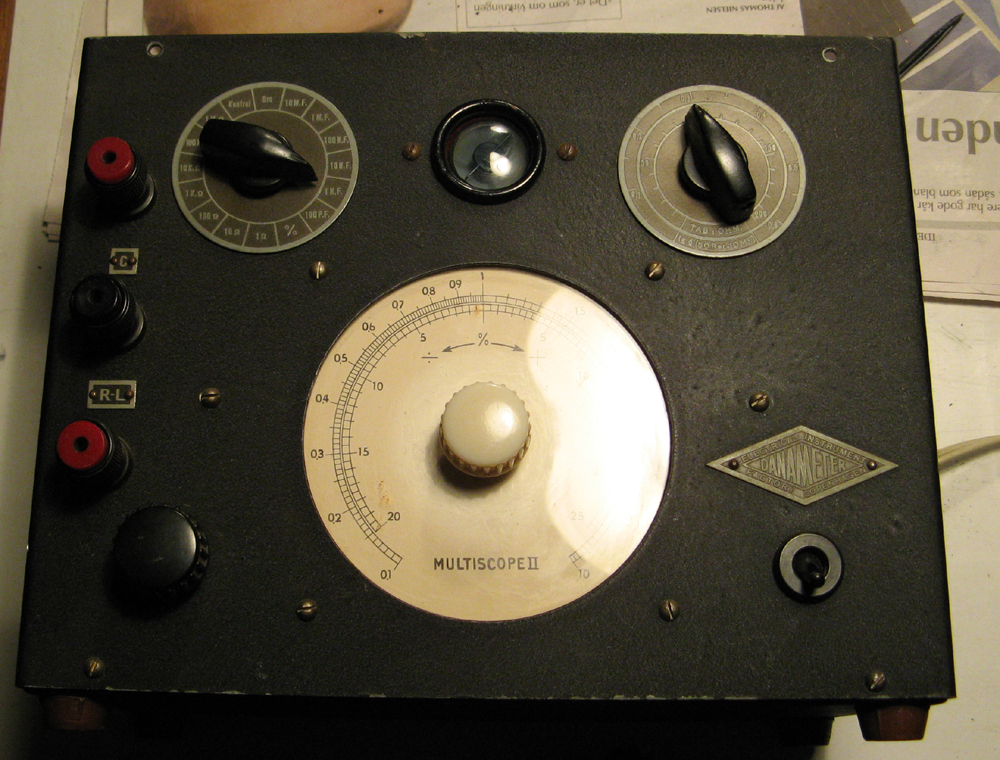
I recently found this old Danish tube equipped capacitor checker (LCR meter):
 .
.
It's a Danameter (type A2) apparently produced in the late 30s.
This picture of the internal is nice:
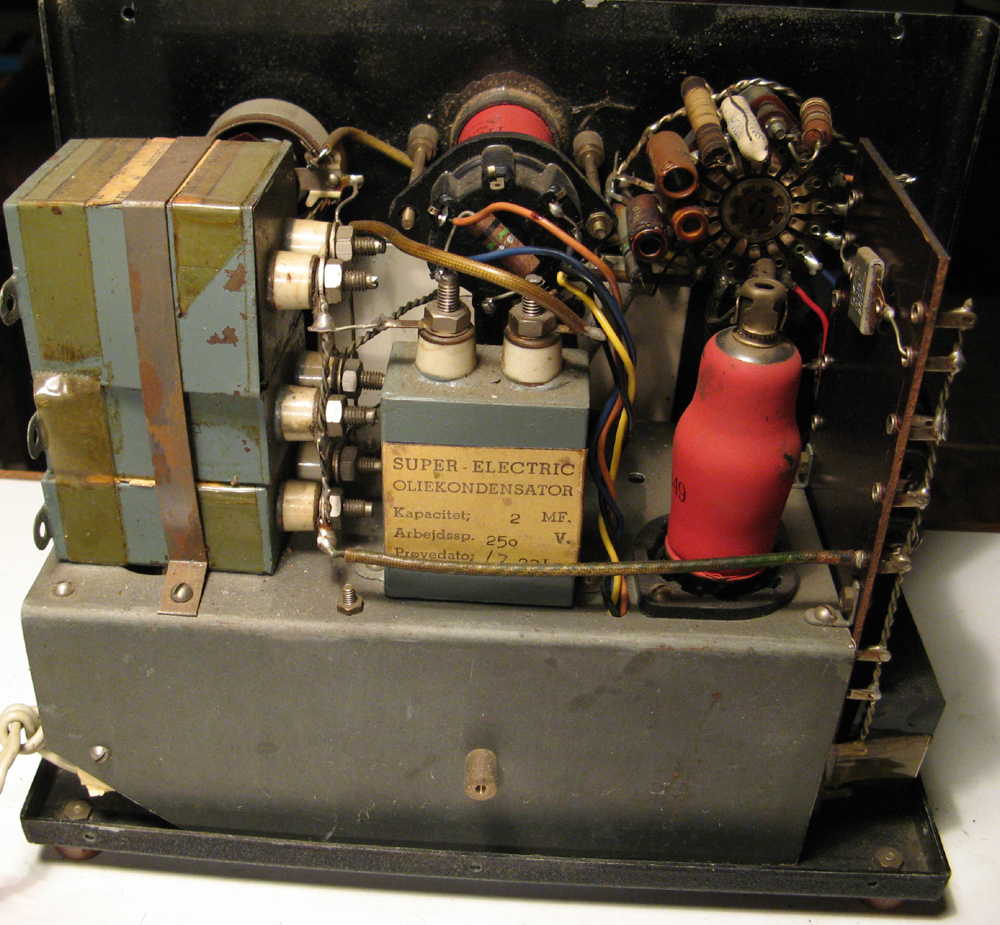
It suppose to work, but I haven't got a clue how to use it. I've been looking around the web for manual for similar meters but haven't be able to break the code of the apparatus.
The scale of the switch on the left is divided this way:
(from the top, clockwise) ‘bridge’/10 M.F./ 1 M.F./ 100 N.F./ 10 N.F./ 1 N.F./ 100 P.F./ % /1 Ω/10 Ω/100 Ω/1 K Ω/10 K Ω/100 K Ω/1 M Ω/’control’
The pot below on the left ‘open’ and ‘close’ the eye of the tube.
The pot on the top right has two scales:
‘Loss in OHM” – going from 0 to 200
‘tg á - or ‘tg δ’ – (50 per. – 10 .M.F) – going from 0 to 0.8
This nice scale:
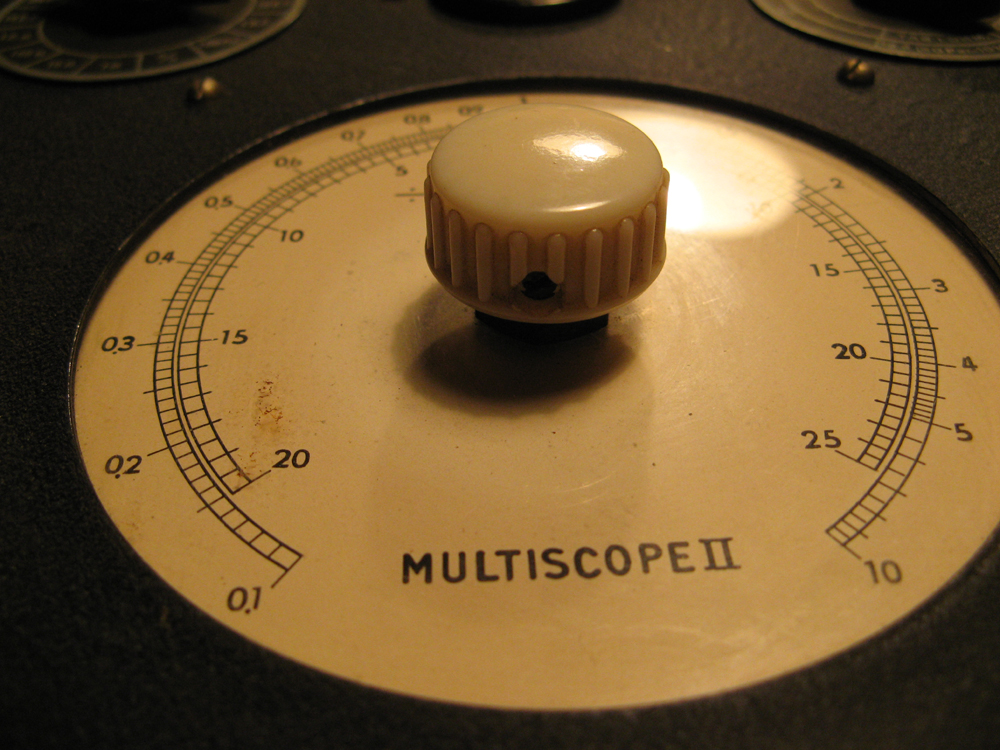
has a pot but no hand.
I'm no technician but know that the apparatus should be able to measure resistance in ohm and the value of capacitors; it should be able to measure if capacitors are defect.
Hints - or better - a precise description of the functions of this beautiful piece of vintage tube equipment will be appreciated very much.
greetings from Denmark and
Peter Q.
It's a Danameter (type A2) apparently produced in the late 30s.
This picture of the internal is nice:
It suppose to work, but I haven't got a clue how to use it. I've been looking around the web for manual for similar meters but haven't be able to break the code of the apparatus.
The scale of the switch on the left is divided this way:
(from the top, clockwise) ‘bridge’/10 M.F./ 1 M.F./ 100 N.F./ 10 N.F./ 1 N.F./ 100 P.F./ % /1 Ω/10 Ω/100 Ω/1 K Ω/10 K Ω/100 K Ω/1 M Ω/’control’
The pot below on the left ‘open’ and ‘close’ the eye of the tube.
The pot on the top right has two scales:
‘Loss in OHM” – going from 0 to 200
‘tg á - or ‘tg δ’ – (50 per. – 10 .M.F) – going from 0 to 0.8
This nice scale:
has a pot but no hand.
I'm no technician but know that the apparatus should be able to measure resistance in ohm and the value of capacitors; it should be able to measure if capacitors are defect.
Hints - or better - a precise description of the functions of this beautiful piece of vintage tube equipment will be appreciated very much.
greetings from Denmark and
Peter Q.
Last edited:

 But I don't have a clue how it works but COOL!
