• The move to the new server is done. There are some software and database maintenance updates in process. This has us passing the hat around to help out. We appreciate any donations. Seriously, even a dollar helps. The payment page may be found here - https://www.audiokarma.org/support.html

Toolkit

JRCookie

New Member
Can somebody point me in the right direction. I'm starting to collect some old pioneers (I have an sx-1050 as of now) but I know nothing about soldering or taking care of old electronics. I need to get some tools (but I have no idea what I'll need) and need to do some reading. Can somebody recommend some reading and/or some tools and where I should get them? Possibly also a good machine to start on (i.e an sx-550?)

Thanks so much,

Jason
 
Register to hide this ad
As to a DIY electronics toolkit, this is what I generally would recommend.

Equipment & Tools

- Xytronic 379 soldering station, temperature controlled ($50 from howardelectronics.com)
- Helping hands (Radio Shack has these)
- Hands-Free Magnifier (like this one - http://www.garrettwade.com/shopping/product/anotherview.jsp?img=/product/large/19R0501_large.jpg)
- Solder Sucker
- De-soldering Braid
- Digital Multi-Meter (picked up a decent one at Wal-Mart for $20)
- Wire strippers
- Wire cutters (regular size and miniature)
- Needle nosed pliers (miniature, variety of shapes)
- Tweezers
- Forceps
- X-Acto knife
- Dental pics
- Screwdrivers, wrenches, etc. (stuff you probably have on hand)
- Test leads with alligator clips on each end
- Rulers (6" works fine)
- Drill and bits (drill press can come in very handy, too)
- Small files
- Light source on articulated arm
- Nut drivers

Supplies
- Solder (most any lead solder with flux core should be fine)
- Flux
- Small brushes (dusting, flux application)
- Cable ties
- Heatshrink tubing (selection of various diameters)
- Heat Gun (to shrink the heatshrink tubing)
- Containers to hold parts
 
I'll add that hemostats and great to have on hand, as well as old Mason and baby food jars for keeping parts, and a good light source-- two even to prevent shadows!

Gear up and good luck!
 
All of the above lists are good. I like to use banana to J clip leads. They are smaller than alligators, less chance of arky-sparky. Also a small tool for adjusting pots and IF transformers. It is a plastic tube with a small screwdriver blade on each end. One regular and one recessed. Get good quality tools like Xcelite, too. Buy good stuff, buy it once.
Glenn
 
oysterbar in the first post did well.


I also have a friend here at AK named birdsog that swears by red handled wire strippers...
 
I also have a friend here at AK named birdsog that swears by red handled wire strippers...

I've got blue Klein strippers :)

Granted, I use those on stereo gear AND when roughing in the electrical for a house.

They're all ergonomical and stuff, too :thmbsp:


Philip
 
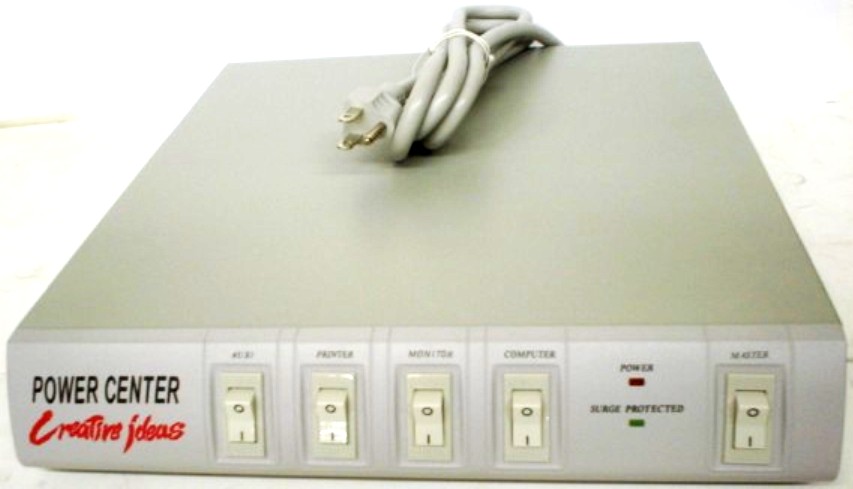
Don't forget about the work area. You need ample room to work and good lighting. A switched power outlet center like the one below is very helpful. Relabel the switches for what you use them for. For example, mine are labeled "iron" "lights" "work" Work being where I plug the item I'm working on. If you leave the workbench you can shut of the master switch and be sure you haven't left anything on!
Plugging the outlet center into a good GFCI outlet is a good idea from a safety standpoint.

SRG-1000.jpg
 
I'm a champion of the light bulb limiter for starting up an amp. The bulb goes in series with the power cord. It gets real bright at turn on and goes dim when the caps charge. If there is a short it stays bright and nothing gets damaged.

Here's a drawing of it.
 

Attachments

Light Bulb Limiter Bulb Safety

Bulb Safety

The construction of a Series Lamp unit is quite simple but Please, Please put a protective shield around your bulb on your “Series Test Lamp” / “Dim Bulb Tester” / “Poor Man’s Variac.”

I'm an electrician & I have been involved with the tragic consequences of bulbs without shields.

My father (also an electrician) wired an Earth Leakage Circuit Breaker / Safety Switch / Ground Fault Interrupter (same thing different names around the world) at a residence. The resident also wanted to fit one on the shed but wouldn't until he got permission from the trust fund that ran the farm side of the property.

An hour or so after my father left the gentleman climbed onto a truck with a lead light that was missing the shield. He bumped the bulb against the metal back, shattered the glass & the live filament holder sticking out touched the truck back & he was killed.

His wife was almost shocked when she came to check on him. He probably would be alive today if he had plugged the light into his house power. Instead a simple, cheap light bulb left his wife to raise several small children on her own.

A broken bulb will have the metal arms that hold the filament sticking out ready to fry you. One will be Live / Hot / Active & the other Neutral / Cold. Please fit either a metal cage from a lead light or a PVC pipe collar with a few holes drilled in it for visibility & cooling.

A little mechanical protection could save a fatality or serious shock. This is especially important on lamps that are portable or easily knocked over.

Regards,
Brian.
 
wouldn't you want rosin core solder rather then a flux core? Just asking since all my electronics solder is rosin core both leaded and lead free.
 
wouldn't you want rosin core solder rather then a flux core? Just asking since all my electronics solder is rosin core both leaded and lead free.
Same thing; rosin is a type of flux. You don't want to use acid core - that's only for plumbing work on copper pipes.

One more really handy thing I've found is a TV turntable. These are used to put TV's on to rotate them for a better view. Put your project on this (on it's side) and you can easily rotate it for better access. I find it super handy when recapping a piece of gear; you can hold the component on one side and then rotate it easily for desoldering.

Also a small / bright LED flashlight. I hold it up to the component on one side of the PC board and then can easily locate the wires on the other side.

JimB
 
That is why I asked since all the electronic solder I have run into says rosin core not flux core. I could be very wrong I only have about a dzen different types of solder from plain lead to hard silver solder and food service stuff. I used to do a LOT of specialized solder during my 14 years as a custom knifemaker...


Same thing; rosin is a type of flux. You don't want to use acid core - that's only for plumbing work on copper pipes.

One more really handy thing I've found is a TV turntable. These are used to put TV's on to rotate them for a better view. Put your project on this (on it's side) and you can easily rotate it for better access. I find it super handy when recapping a piece of gear; you can hold the component on one side and then rotate it easily for desoldering.

Also a small / bright LED flashlight. I hold it up to the component on one side of the PC board and then can easily locate the wires on the other side.

JimB
 
Mark,
I'm certain that you know from experience more about fluxes then I do. Here's some info I found on the life of Flux:

Rosin based fluxes are made from rosin which is extracted from pine sap. The purified product is known as "Water White Rosin". The active ingredient is an organic acid, abietic acid and may contain homologs such as dehydro abietic acid and leviopmaric acid (1,2). In addition to rosin other activators may be present at different levels to increase the ability to clean and deoxidize. Activators are compounds that decompose at soldering temperatures yielding ammonia or hydrochloric acid in the process. Flux activity is catagorized as R (rosin only) RMA (rosin mildly activated) and RA (rosin activated). A low boiling solvent such as isopropanol is used as the vehicle so they are flammable.

http://www.finishing.com/Library/flux.html

JimB
 
Back
Top Bottom