


uxwbill
Lurking in the Shadows
Okay, I'd like to start a discussion and see how far it goes. How many of you have seen a BPC (black plastic crap) tape deck come from a normally-reputable manufacturer? Doesn't have to be any particular format, can be cassette, reel-to-reel or whatever.
Here's mine: a Sony TC-FX211 (picture taken prior to cleaning it):
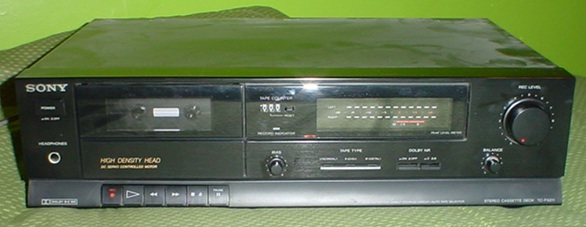
Doesn't look too bad from the front...
I found it today, perched atop a case of cassette tapes in a thrift shop. This was the same shop where I found the NOVA-6 speakers, so I was feeling lucky. Thought I'd take it off their hands and bid them $10 for the cassettes, nice wooden multi-drawer case and the Sony cassette deck. I could see that it had a manual biasing adjustment on the front and figured it would be good. Also visible were indications for normal, chrome and metal tapes, with auto-detection being implied. So what if it's only auto-stop, that's fine with me. I have a TC-W490 dual-well auto-stop-only deck that is quite nice.
I also walked out of there with a Technics SL-BL3 turntable, of which more later (and in the appropriate forum). In the end, I swapped the services of fixing a TV for these pieces.
Got all these things home and the tape transport is running, just way too slowly. Rewind and fast forward are nearly impossible. A-ha! It must be bad belts! I popped the cover and this is what I saw.
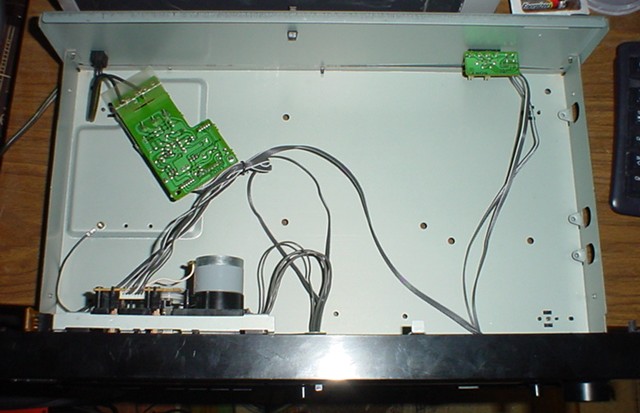

If this is the way other modern cassette decks look inside, we're all in trouble. There's nothing missing in that picture--all the working circuitry is right up in the front panel. I've seen Emerson and Soundesign cassette transports that were better made. Date codes seemed to suggest 2003 as a possible date of manufacture?
Getting to the belts and putting them back was a lot of fun. The transport itself has to come out, and to do that isn't so bad. Four screws, one metal bracket and the front door's outer decorative cover have to come off. Then you can eject the cassette basket, unplug the tape-type detection switch connector and carefully pivot the transport out of the unit. This is better than a number of other decks I've been inside, where many stupid tinned, soldered or litz wire connections link the mechanicals to the circuitry.
But you can't get at the motor, as the front is shrouded in plastic. I'm not sure why Sony called this a "DC servo controlled motor". This implies feedback capabilities for speed correction, and there is no such thing going on here--just a simple, cheap Mabuchi DC permanent magnet motor. So...how does the motor come out? It's clear that there are screws driven into the plastic shroud, yet their heads are invisible. It turns out that there is a piece of plastic over the reel table that unscrews and reveals all the gears and workings of the transport itself. Once that's out of the way, you can see the screws holding the motor into place. Those come out and the motor drops away to reveal the pulley. Now you can put a belt on, although it helps to have four hands...one to put the motor back up, one to hold the belt in place so it won't slip off the motor pulley, one to drive the screws in and another to keep the whole transport from going south and probably throwing all manner of gears and little parts everywhere.
For what it's worth, the belts seemed OK to me, so I put them back into place. Maybe one of them was misrouted--it seemed like someone had been into this set before? I put them back into place, put the "table" back into place, put the transport back in and got it to the point where I could test it.
From that point on, it has given the impression of working (meaning that the reels appear to turn at the right speed, and REW/FF operations are much better). There is no full auto-stop capability, only a simple arm that stops the mechanism in play or record mode when the tape pulls taut against it. I thought even the cheapest and nastiest component cassette decks did that?
I've put several garbage cassettes through it and none have been eaten, although I have yet to hook up any amplifiers or speakers.
There are still some problems. A cheap fiber-board looking c-clip is all that appears to hold the capstan and flywheel in place. Mine was broken, so the capstan and flywheel will pull out if given any help. I'm not sure how I'll fix that part. I'd welcome your thoughts.
What I really can't understand is how Sony could "sink" to such a level...no full auto-stop, very cheap design...I would think people looking to buy a Sony product would expect better. I certainly would have.
Why I'd bother fixing it? I guess I just can't help myself. I'll tinker with anything before giving up and sending it to the recycler.
Here's mine: a Sony TC-FX211 (picture taken prior to cleaning it):
Doesn't look too bad from the front...
I found it today, perched atop a case of cassette tapes in a thrift shop. This was the same shop where I found the NOVA-6 speakers, so I was feeling lucky. Thought I'd take it off their hands and bid them $10 for the cassettes, nice wooden multi-drawer case and the Sony cassette deck. I could see that it had a manual biasing adjustment on the front and figured it would be good. Also visible were indications for normal, chrome and metal tapes, with auto-detection being implied. So what if it's only auto-stop, that's fine with me. I have a TC-W490 dual-well auto-stop-only deck that is quite nice.
I also walked out of there with a Technics SL-BL3 turntable, of which more later (and in the appropriate forum). In the end, I swapped the services of fixing a TV for these pieces.
Got all these things home and the tape transport is running, just way too slowly. Rewind and fast forward are nearly impossible. A-ha! It must be bad belts! I popped the cover and this is what I saw.
If this is the way other modern cassette decks look inside, we're all in trouble. There's nothing missing in that picture--all the working circuitry is right up in the front panel. I've seen Emerson and Soundesign cassette transports that were better made. Date codes seemed to suggest 2003 as a possible date of manufacture?
Getting to the belts and putting them back was a lot of fun. The transport itself has to come out, and to do that isn't so bad. Four screws, one metal bracket and the front door's outer decorative cover have to come off. Then you can eject the cassette basket, unplug the tape-type detection switch connector and carefully pivot the transport out of the unit. This is better than a number of other decks I've been inside, where many stupid tinned, soldered or litz wire connections link the mechanicals to the circuitry.
But you can't get at the motor, as the front is shrouded in plastic. I'm not sure why Sony called this a "DC servo controlled motor". This implies feedback capabilities for speed correction, and there is no such thing going on here--just a simple, cheap Mabuchi DC permanent magnet motor. So...how does the motor come out? It's clear that there are screws driven into the plastic shroud, yet their heads are invisible. It turns out that there is a piece of plastic over the reel table that unscrews and reveals all the gears and workings of the transport itself. Once that's out of the way, you can see the screws holding the motor into place. Those come out and the motor drops away to reveal the pulley. Now you can put a belt on, although it helps to have four hands...one to put the motor back up, one to hold the belt in place so it won't slip off the motor pulley, one to drive the screws in and another to keep the whole transport from going south and probably throwing all manner of gears and little parts everywhere.
For what it's worth, the belts seemed OK to me, so I put them back into place. Maybe one of them was misrouted--it seemed like someone had been into this set before? I put them back into place, put the "table" back into place, put the transport back in and got it to the point where I could test it.
From that point on, it has given the impression of working (meaning that the reels appear to turn at the right speed, and REW/FF operations are much better). There is no full auto-stop capability, only a simple arm that stops the mechanism in play or record mode when the tape pulls taut against it. I thought even the cheapest and nastiest component cassette decks did that?
I've put several garbage cassettes through it and none have been eaten, although I have yet to hook up any amplifiers or speakers.
There are still some problems. A cheap fiber-board looking c-clip is all that appears to hold the capstan and flywheel in place. Mine was broken, so the capstan and flywheel will pull out if given any help. I'm not sure how I'll fix that part. I'd welcome your thoughts.
What I really can't understand is how Sony could "sink" to such a level...no full auto-stop, very cheap design...I would think people looking to buy a Sony product would expect better. I certainly would have.
Why I'd bother fixing it? I guess I just can't help myself. I'll tinker with anything before giving up and sending it to the recycler.


