• The move to the new server is done. There are some software and database maintenance updates in process. This has us passing the hat around to help out. We appreciate any donations. Seriously, even a dollar helps. The payment page may be found here - https://www.audiokarma.org/support.html

Dust cap dent remover tool

DublinTrader

Well-Known Member
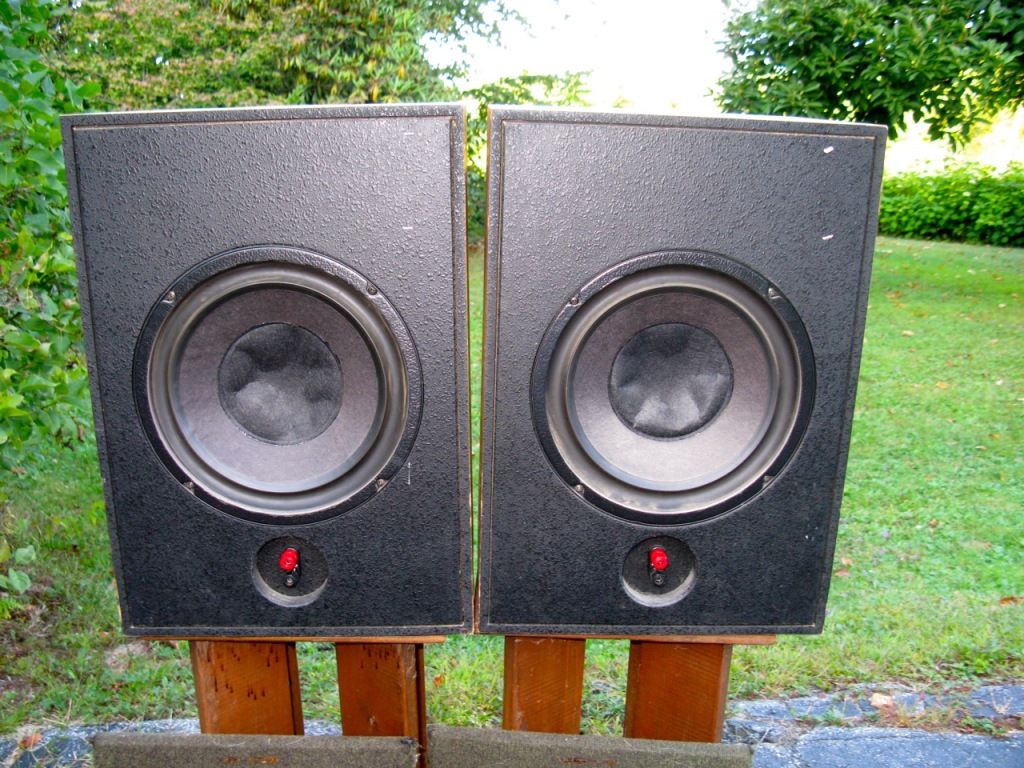
I posted earlier this month about a pair of Klipsch KG 4 speakers I purchased. Unfortunately all the dust caps were pushed in. I tried everything in my bag of tricks such as tape and using a vacuum and was able to sort out the driver dust caps but couldn't budge the rear firing woofer or the tweeters. I was about to accept that I would be able to do anything and then inspiration struck. I remembered a tool I had bought from Vintage Electronics to replace belts in tape recorders and other belt driven gear. It is long with a very small hook on one end and a small slotted blade on the other. I then used the hooked end to grab the dust cap and pull it out. They didn't come out perfect but I'm happy with the result

The before-Tweeters
file-8.jpg


file-7.jpg


The after-Tweeters

file-1.jpg


file-4.jpg


The before-woofers

KG2C.jpg


The after-woofers

file-2.jpg


file-6.jpg


I am very pleased with the result. I can't even notice the insertion points.

This is the tool:

file-9.jpg


file-10.jpg
 
Last edited:
Register to hide this ad
dust cap

I have a question, If dust caps are pushed in but speaker still sounds great, should i bother ? Or is it just a cosmatic thing ?? i,ve got some old pioneer spk,s and tried the same thing with no luck. Would hate to stick a pin in them.
 
I have a question, If dust caps are pushed in but speaker still sounds great, should i bother ? Or is it just a cosmatic thing ?? i,ve got some old pioneer spk,s and tried the same thing with no luck. Would hate to stick a pin in them.

It's cosmetic. If they still sound great, then it's fine.
 
I used a toilet paper cardboard tube. Put on the cap surface and sucked.
Pulled right out.
 
Dumb question, but if they are passive radiators, couldn't you just take them out and press the dust cap back out from the rear? Usually passives have an open back...
 
I have found a much better way. I snap a toothpick in half and use the wide side of a toothpick. I then take a drop of Aileen's tacky glu and glue it to the indented area. I let it sit for about 4 hours. It will bond very strongly to the point you can pull it out easily. If you keep pulling on it, you can lightly massage the areas around and form them. Do not try to pull the toothpick off just yet, you'll rip the dustcap material. what you do is get a hair dryer and heat the glue, it will easily break the bond after about 15 seconds. The toothpick is off at this point. Keep hitting the rest of the glue w/ the hairdryer and lightly use your finger tip to ball up the rest of the glue and roll it off the dustcap. Repeat on all dented areas. I can make any damaged dustcap other than aluminum ones look like new. You are hosed with aluminum.
 
I used a similar tool on a tweet and a woofer, all in all worked well, a drop of Aileenes fixes the hole. I will try the toothpick method as posted by hatrack next time.

But, everytime I tried the vacuum thingy with small shop vac or larger, doesn't work. I thought I read somewhere to use a wetting agent with a small brush, like min spirits or acetone to make the paper style dust cap a little more pliable and then suck away? Can anyone confirm this?

By the way, the OPs tweets seem to have a non-paper style cover or membrane; doesn't seem like a space vac would pull those suckers back to any normal shape!
 
"By the way, the OPs tweets seem to have a non-paper style cover or membrane; doesn't seem like a space vac would pull those suckers back to any normal shape! "

You are correct. Those are either heppner or CV dhorm, and you could never budge those with a vacuum. The material is more like plastic.
 
"By the way, the OPs tweets seem to have a non-paper style cover or membrane; doesn't seem like a space vac would pull those suckers back to any normal shape! "

You are correct. Those are either heppner or CV dhorm, and you could never budge those with a vacuum. The material is more like plastic.

My method works though.:D
 
Not always on those. The slightest touch (getting glue off) and they will pop right back in. I tried your way a while back on some CV dhorms. Had to use a dental pick and a needle.

You need to use heat with phenolic to reform it. It will stay. I've done quite a few w/ success.
 
interesting thread. I've some pushed in JBL woofers that won't respond to the vacuum method, at least dry. do most try as a wetting agent water or some type of mild solvent? At some point I'll try the toothpick or dental pic type method.
 
I used a similar tool on a tweet and a woofer, all in all worked well, a drop of Aileenes fixes the hole. I will try the toothpick method as posted by hatrack next time.

But, everytime I tried the vacuum thingy with small shop vac or larger, doesn't work. I thought I read somewhere to use a wetting agent with a small brush, like min spirits or acetone to make the paper style dust cap a little more pliable and then suck away? Can anyone confirm this?

By the way, the OPs tweets seem to have a non-paper style cover or membrane; doesn't seem like a space vac would pull those suckers back to any normal shape!

I used water and a foam brush on a pair of KG4 passives and then used my vacuum. Worked great!
 
Back
Top Bottom