Mister Pig
Pigamus Maximus
The TBI Millenia is an interesting Class D amplifier that resides in a no man's land, where it is more expensive than the T chip amps and other $100 wonders. Yet with a $500 price tag, it is not expensive enough to be take seriously by the average audiophile. But that is a mistake.
I have had all three versions of this amplifier, as it has gone through the V1, then 1.1, and now V2. Class D is inherently different than a traditional amplifier, and until now has had a very distinctive signature in my opinion, well at this price point at least. This version of the amp has seen the designer implementing a new type of coupling capacitor, Polyphenylene-Sulphide. The compact board size of the Millenia does not allow for the use of traditional boutique type capacitors for their size is too large, and there are some electrical properties that are supposedly less than desirable.
While I know next to nothing about PPS capacitor technology, I do know what I hear in terms of sound difference. Especially since I also have a V1.1 amp to make direct comparisons to. While the previous amp was very nice sounding, and was refined and smooth, it tended to sound a bit closed in. My Electra Print amplifiers did low level detail better, and the sound expanded to fill the room with that desirable layering to the music.This latest version of the Millenia now has this kind of presentation, with a lack of grain or odd tonal anomalies that artificially create the illusion of heightened presence. The tonal balance is slightly lighter in the lower midrange than my SET, and if i were to nit pick it is not quite as polished and smooth, but it is so darn close its not funny. Remember we are talking about a $500 integrated versus a amp/pre combo that costs $6K and has a $800 pair of Sophia Carbon Princess output tubes.
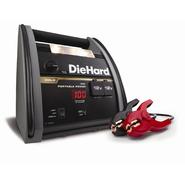
Now the amplifier is capable of 32 wpc with the AC switching power supply, or 10 wpc with a 12 volt DC supply. I find the battery supply offers the highest resolution in terms of sound quality, although as the amp has progressed the AC supply has closed the gap in terms of SQ. I could see in certain situations where the AC supply would be preferable. Now if you were to pair up two SLA 12 volt batteries,, you can get 32 wpc on battery power. What I wonder what would happen if you were to source a linear AC power supply for the amp, and it may be possible to get even closer to the battery performance without the complexity. But since I have high efficiency speakers the 10 wpc is plenty of power. So I can run $50 automotive jump pack, that gives me a battery and charger in a self contained unit.
So for that aspiring audiophile with limited means, this amplifier is a fantastic way to build a system. Yes its limited on inputs, and hooking up a subwoofer is a PITA. But the sound quality is remarkable for its price. Just pair it with the right type of speakers, and you can have a wonderful system for a very reasonable price.
Regards
Mister Pig
I have had all three versions of this amplifier, as it has gone through the V1, then 1.1, and now V2. Class D is inherently different than a traditional amplifier, and until now has had a very distinctive signature in my opinion, well at this price point at least. This version of the amp has seen the designer implementing a new type of coupling capacitor, Polyphenylene-Sulphide. The compact board size of the Millenia does not allow for the use of traditional boutique type capacitors for their size is too large, and there are some electrical properties that are supposedly less than desirable.
While I know next to nothing about PPS capacitor technology, I do know what I hear in terms of sound difference. Especially since I also have a V1.1 amp to make direct comparisons to. While the previous amp was very nice sounding, and was refined and smooth, it tended to sound a bit closed in. My Electra Print amplifiers did low level detail better, and the sound expanded to fill the room with that desirable layering to the music.This latest version of the Millenia now has this kind of presentation, with a lack of grain or odd tonal anomalies that artificially create the illusion of heightened presence. The tonal balance is slightly lighter in the lower midrange than my SET, and if i were to nit pick it is not quite as polished and smooth, but it is so darn close its not funny. Remember we are talking about a $500 integrated versus a amp/pre combo that costs $6K and has a $800 pair of Sophia Carbon Princess output tubes.
Now the amplifier is capable of 32 wpc with the AC switching power supply, or 10 wpc with a 12 volt DC supply. I find the battery supply offers the highest resolution in terms of sound quality, although as the amp has progressed the AC supply has closed the gap in terms of SQ. I could see in certain situations where the AC supply would be preferable. Now if you were to pair up two SLA 12 volt batteries,, you can get 32 wpc on battery power. What I wonder what would happen if you were to source a linear AC power supply for the amp, and it may be possible to get even closer to the battery performance without the complexity. But since I have high efficiency speakers the 10 wpc is plenty of power. So I can run $50 automotive jump pack, that gives me a battery and charger in a self contained unit.
So for that aspiring audiophile with limited means, this amplifier is a fantastic way to build a system. Yes its limited on inputs, and hooking up a subwoofer is a PITA. But the sound quality is remarkable for its price. Just pair it with the right type of speakers, and you can have a wonderful system for a very reasonable price.
Regards
Mister Pig