• Please note that there are a few updates and clarifications made in the Audiokarma Rules, mostly relating to advertising and the addition of the new "Paying it Forward" & "Giving back" forums in the AudioKarma Audio Marketplace section.

Ahhh!!! KEF !04/2

Jon S

Super Member
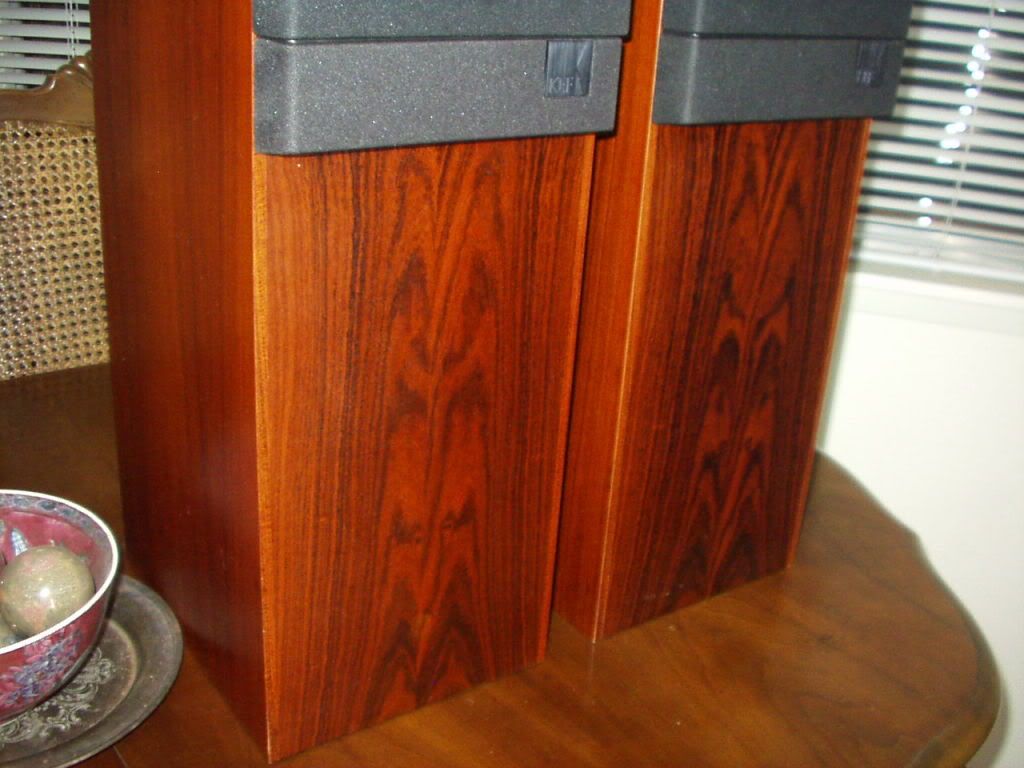
I was given a pair of KEF 104/2s. The cabinets appear to be in fine shape with one problem. It looks like one cabinet was exposed to the sun as the face and top of the veneer is a shade lighter than the rest of the cabinet. Both tweeters were dead. I was luckily able to find a pair of replacements from KEF in NJ. I have read that other than the tweeters, the foam rot issue is the other main cause of problems.

Here's my question. The woofers appear to have rubber surrounds and the anulus surround in the center also appears to be made of rubber. I have not read anywhere that there were rubbered version of these drivers. Also, there appears two chunks of foam cylinders sitting right below the top woofer. What are they for? They appear to be in good condition with very early signs of tearing on one. are these foam rings in the proper position?

After replacing the tweeters, the speakers do not have the 3D effect soundstage imaging I remembered them having before. I swear that the 104/2 I listened to before had startling holographic imaging. Granted the equipment I am using (a Sony 444ES receiver) is not the best, but will the soundstage be that different?
 
Register to hide this ad
Depends on what you ran them with before. IIRC, either the older or newer versions had rubber surrounds, but I didn't think that the center donut was rubber as well.
 
I was given a pair of KEF 104/2s. The cabinets appear to be in fine shape with one problem. It looks like one cabinet was exposed to the sun as the face and top of the veneer is a shade lighter than the rest of the cabinet. Both tweeters were dead. I was luckily able to find a pair of replacements from KEF in NJ. I have read that other than the tweeters, the foam rot issue is the other main cause of problems.

Here's my question. The woofers appear to have rubber surrounds and the anulus surround in the center also appears to be made of rubber. I have not read anywhere that there were rubbered version of these drivers. Also, there appears two chunks of foam cylinders sitting right below the top woofer. What are they for? They appear to be in good condition with very early signs of tearing on one. are these foam rings in the proper position?

After replacing the tweeters, the speakers do not have the 3D effect soundstage imaging I remembered them having before. I swear that the 104/2 I listened to before had startling holographic imaging. Granted the equipment I am using (a Sony 444ES receiver) is not the best, but will the soundstage be that different?

Jon,

I have a pair of these, and i'm currently restoring another pair for a customer.

When I first got mine, about 6 months ago (after a 20-year wait!:yes:), I was a bit disappointed, remembering what the first set I had heard sounded like. The electronics driving mine are definitely superior to what I was listening to 20 years ago.

Here's how I got the "magic" back, and it's all easy, just labor intensive:

1. Remove the MTM pods, and remove the hatch to the top woofer. After making sure the top woofer is in good shape (the ones in my customer's 104/2 were NOT, but that's a story for another time), check the gasket under the hatch. It probably should be replaced. Pick your favorite method for sealing a speaker cabinet, apply where the old gasket was, and replace the hatch. When bolting it back down, slowly torque the bolts down as if you were tuning a drum head. If you're not sure what I mean, it's similar to tightening the lug nuts/bolts on a car wheel, i.e., first one, then the one ACROSS from it, etc. The main difference here is, drive one bolt in until you start to feel resistance, which will be nowhere near all the way in, then go to the one opposite. Keep going in this manner until the bolts are firmly torqued, but NOT enough to warp the hatch. It may take 3 or 4 times around the bolts to get there, but the end result is more than worth it.

2. Before re-installing the MTM pod, firmly torque down EVERY screw on the back. And I mean FIRM. This may be more important than the woofer hatch even. My KEFs were losing a LOT of energy from the tweeters and the B110s just because of slight leaks, and lost inertia from the loose screws. Replace the gasket on back of the pod if necessary. Make sure you have all the spacers when remounting the pod, and torque the bolts nice and firm against the cabinet, to avoid inertial losses there as well.

3. Repeat the procedure in #1 on the bottom woofer chamber. A BIG hint for getting the bottom panel off in one piece: Leave the feet ON. Take out all the bolts, and use the feet as points to get leverage on for prying if necessary. The feet/spikes only bolt to the bottom panel, not the cabinet.

4. Slight detail left out of #1 and #3: Torque down the woofer nuts. They will only go a certain distance, so don't fight them. The gaskets for the woofers should be fine, don't worry about them at all. Also, make sure the bolts for the force canceling rod are tight. You'll have to find the top one by feel, with a socket extension.

All the above should take care of the sound issues, especially by making sure the new tweeter is air-tight against the baffle.

The B200 woofers in the 104/2 always had inverted rubber surrounds. The only foam part was the annulus, and I've heard rumors on some of those being rubber (seems like we're getting close to some kind of bad joke here, but I will not partake . . . :scratch2:), but I've never seen a rubber annulus.

Good luck, let me know if you need more info.
 
Jon,

I have a pair of these, and i'm currently restoring another pair for a customer.

When I first got mine, about 6 months ago (after a 20-year wait!:yes:), I was a bit disappointed, remembering what the first set I had heard sounded like. The electronics driving mine are definitely superior to what I was listening to 20 years ago.

Here's how I got the "magic" back, and it's all easy, just labor intensive:

1. Remove the MTM pods, and remove the hatch to the top woofer. After making sure the top woofer is in good shape (the ones in my customer's 104/2 were NOT, but that's a story for another time), check the gasket under the hatch. It probably should be replaced. Pick your favorite method for sealing a speaker cabinet, apply where the old gasket was, and replace the hatch. When bolting it back down, slowly torque the bolts down as if you were tuning a drum head. If you're not sure what I mean, it's similar to tightening the lug nuts/bolts on a car wheel, i.e., first one, then the one ACROSS from it, etc. The main difference here is, drive one bolt in until you start to feel resistance, which will be nowhere near all the way in, then go to the one opposite. Keep going in this manner until the bolts are firmly torqued, but NOT enough to warp the hatch. It may take 3 or 4 times around the bolts to get there, but the end result is more than worth it.

2. Before re-installing the MTM pod, firmly torque down EVERY screw on the back. And I mean FIRM. This may be more important than the woofer hatch even. My KEFs were losing a LOT of energy from the tweeters and the B110s just because of slight leaks, and lost inertia from the loose screws. Replace the gasket on back of the pod if necessary. Make sure you have all the spacers when remounting the pod, and torque the bolts nice and firm against the cabinet, to avoid inertial losses there as well.

3. Repeat the procedure in #1 on the bottom woofer chamber. A BIG hint for getting the bottom panel off in one piece: Leave the feet ON. Take out all the bolts, and use the feet as points to get leverage on for prying if necessary. The feet/spikes only bolt to the bottom panel, not the cabinet.

4. Slight detail left out of #1 and #3: Torque down the woofer nuts. They will only go a certain distance, so don't fight them. The gaskets for the woofers should be fine, don't worry about them at all. Also, make sure the bolts for the force canceling rod are tight. You'll have to find the top one by feel, with a socket extension.

All the above should take care of the sound issues, especially by making sure the new tweeter is air-tight against the baffle.

The B200 woofers in the 104/2 always had inverted rubber surrounds. The only foam part was the annulus, and I've heard rumors on some of those being rubber (seems like we're getting close to some kind of bad joke here, but I will not partake . . . :scratch2:), but I've never seen a rubber annulus.

Good luck, let me know if you need more info.

Thats a NICE and thoughtful response!:thmbsp:
 
Fixing veneer

Wonderful response.

Getting them airtight is the trick for acoustic suspension speakers.

I've built furniture professionally for 40 years.
To fix the veneer: most of these were oil finished. You can wipe them down with a couple of coats of tung oil and they usually pop right back. Watco makes tung oil with color in it and you may have to go to that.

I have a pair of Calindas that sat unloved in the sun for 7 or 8 years (dead tweeter), and three coats of clear tung oil turned them back to like new. Wipe it on, let it set for a little while and buff it back off. Let it sit for 24 hours and repeat. After you get it to where it looks good, put a coat of finishing wax on them.
Do not use furniture polish. I think that they're all crap.
 
The KEFs- what's the specs on them?

Seem like they're one of the golden eggs of vintage audio.

I bet once fixed, they'll sound fantastic.
 
Hi Guys, I'll have to amend one statement I made above...

...It seems that some of the later KEF 104/2, with the bi-ampable crossover, had not only the foam "donuts", but the outer surround was a non-inverted foam surround as well.

I found this out because I'll be working on a pair like this for someone in the near future, and they sent photos in advance.
 
Mine have the foam which is a bummer. Do you know if the rubber and the foam ones are electrically the same, as in ohm factor. Can I switch them out as I cannot find any of the foam ones on the Bay to replace a dead one in my set.
 
1. Remove the MTM pods, and remove the hatch to the top woofer. After making sure the top woofer is in good shape (the ones in my customer's 104/2 were NOT, but that's a story for another time), check the gasket under the hatch. It probably should be replaced. Pick your favorite method for sealing a speaker cabinet, apply where the old gasket was, and replace the hatch. When bolting it back down, slowly torque the bolts down as if you were tuning a drum head. If you're not sure what I mean, it's similar to tightening the lug nuts/bolts on a car wheel, i.e., first one, then the one ACROSS from it, etc. The main difference here is, drive one bolt in until you start to feel resistance, which will be nowhere near all the way in, then go to the one opposite. Keep going in this manner until the bolts are firmly torqued, but NOT enough to warp the hatch. It may take 3 or 4 times around the bolts to get there, but the end result is more than worth it.

2. Before re-installing the MTM pod, firmly torque down EVERY screw on the back. And I mean FIRM. This may be more important than the woofer hatch even. My KEFs were losing a LOT of energy from the tweeters and the B110s just because of slight leaks, and lost inertia from the loose screws. Replace the gasket on back of the pod if necessary. Make sure you have all the spacers when remounting the pod, and torque the bolts nice and firm against the cabinet, to avoid inertial losses there as well.

3. Repeat the procedure in #1 on the bottom woofer chamber. A BIG hint for getting the bottom panel off in one piece: Leave the feet ON. Take out all the bolts, and use the feet as points to get leverage on for prying if necessary. The feet/spikes only bolt to the bottom panel, not the cabinet.

4. Slight detail left out of #1 and #3: Torque down the woofer nuts. They will only go a certain distance, so don't fight them. The gaskets for the woofers should be fine, don't worry about them at all. Also, make sure the bolts for the force canceling rod are tight. You'll have to find the top one by feel, with a socket extension.

All the above should take care of the sound issues, especially by making sure the new tweeter is air-tight against the baffle.

The B200 woofers in the 104/2 always had inverted rubber surrounds. The only foam part was the annulus, and I've heard rumors on some of those being rubber (seems like we're getting close to some kind of bad joke here, but I will not partake . . . :scratch2:), but I've never seen a rubber annulus.

Two hours later, BrassTeacher's prescription is working its wonders on my 104/2 pair. A nice trick, BT, it really brings the mids (back) out into the room. Doesn't do anything about those hissy little T-33s except make them even more prominent (:no:), but whatcha gonna do? We endure the T-33s so that we can enjoy those glorious mids. Thanks for the tutorial, it seems to have worked beautifully.
 
The KEFs- what's the specs on them?
Seem like they're one of the golden eggs of vintage audio.
I bet once fixed, they'll sound fantastic.

Deli: If you are a creature of mid-range, then the 104/2 is your speaker. I am a creature of mid-range, so I love this speaker. It is fairly efficient and complements my tube and SS gear.
 
I got a chance to hear a pair of these speakers while I was picking up some gear a guy had for sale.

He had them connected to a Adcom GFA 585 amplifier with matching preamp and a Linn CD player.

The sound was just incredible from this system! :drool:

Needless to say that these speakers are on my short list for speakers. :yes:

Scott
 
They sound great, Scott. I have not heard the 104/2 with "The Kube" attached (enhanced bass response?), nor the "bi-wired" version of these guys, so I can't comment on the 104/2 in those guises.
 
Two hours later, BrassTeacher's prescription is working its wonders on my 104/2 pair. A nice trick, BT, it really brings the mids (back) out into the room. Doesn't do anything about those hissy little T-33s except make them even more prominent (:no:), but whatcha gonna do? We endure the T-33s so that we can enjoy those glorious mids. Thanks for the tutorial, it seems to have worked beautifully.

Hmmm, that does sound a bit odd. :scratch2: It may be a good idea to go back and recheck your connections on the back of the pods to make sure nothing has gotten crossed. It is VERY easy to confuse the wires to the top and bottom B110, or even to accidently cross-wire them, since they both have yellow and green wires, and it's all bundled into one cable tie. The top and bottom B110 MUST be wired correctly, as one of the B110 has a delay circuit on it to deflect some of the tweeter energy upwards.

It wouldn't hurt to make sure the tweeter polarity is correct also.

I have mis-wired the midranges a couple times myself.:stupid:
 
Great speakers, and they are quite affordable now. Considering they were out of my reach in 1986. I think they sound more natural without the cube. Also, the single wire version is the one to seek out; one man's opinion! I still don't own a 104/2, but would love to get one, one day.
 
Researching my KEF 103/4's I found nothing as helpful as your post--a big :thmbsp::thmbsp:

Replacement rubber annulusus on Ebay.

Rod-connected opposing facing bass drivers could be the key to its boxless sound.

KEF seems to have removed the vintage info from its site but you can still get it via WayBackMachine. Seems to be having server problems today though.
http://web.archive.org/web/20051230091036/www.kef.com/allhistory.asp

104/4

How about pre-empting TTISWP?

KEF103-4_lowerWoodgrain.jpg


KEF103-4_onTable.jpg
 
Nice looking set of speakers .... i had a pair of Kef's many years ago and i really liked them ...i should have never traded them off .

ken
 
I want to thank all those who so freely provided advice and guidance for accessing the woofers in the 104/2 cabinet. I never would have figured it out on my own. I have one recommendation to make regarding removal of the hatches - after removing the screws I used a paint scraper as a chisel, hitting it lightly with a hammer all around the crack to free up the hatch from the cabinet. I had tried the hair drier method to no avail.

(Purists please cover your ears) The reason that I needed to access the cabinet was that I noticed that the right channel woofer (lower) wasn't working and that the rubber gasket (?) had disintegrated. As it turned out, the fragments had got into the area around the voice coil, essentially jamming the cone. Having removed the speaker from the cabinet, I cleaned it up as best I could, then I placed it face down and pushed a lot of low frequency through it. Low and behold it started to work again! I know that replacement is the answer, but in the meantime I got some bass back.

Thanks again.

Jim
 
Back
Top Bottom