• The move to the new server is done. There are some software and database maintenance updates in process. This has us passing the hat around to help out. We appreciate any donations. Seriously, even a dollar helps. The payment page may be found here - https://www.audiokarma.org/support.html

across the bench: an electronic menagerie of diagnostic oddities plus photos and design analysis

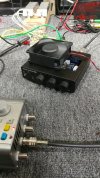
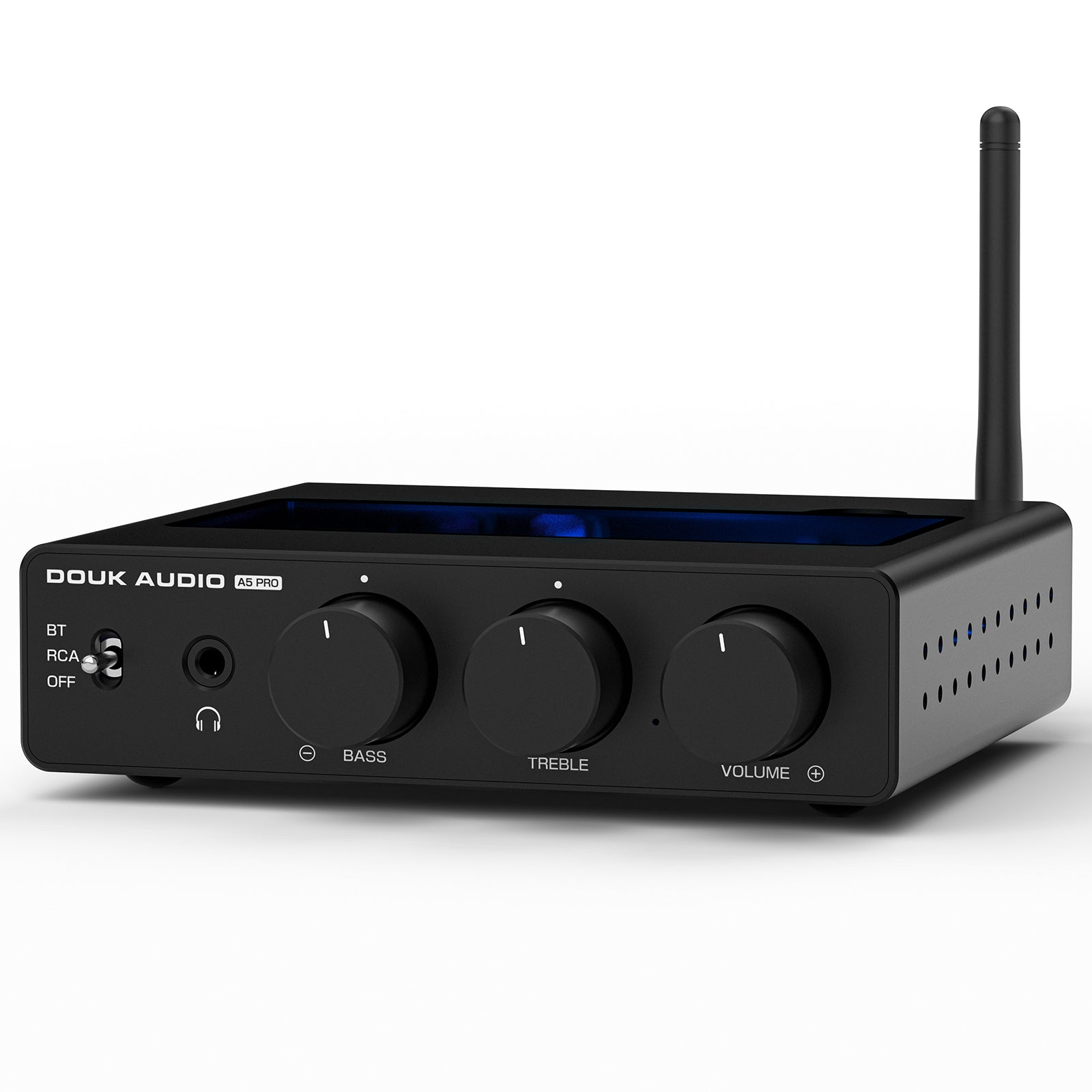
douk a5 pro - 1.jpg
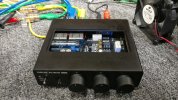
digging into a recent acquisition, douk a5 pro (convertible edition or the sunroof is removable). scrap cooling fan not included, room temp chassis at any volume level is a nice thing.
douk a5 pro - 2.jpg
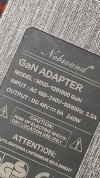
premium price tag (compared to a5 model) includes gan power brick which did not disappoint either when doing measurements
 
Screenshot 2025-08-11 at 17-42-57 Measuring Distortion on the Cheap – Neurochrome - YouTube.png
youtube.com/watch?v=0lc9ramAufY

useful comparison video in regards to measurement hardware shopping and software interface usability.

more than a few threads on ak talk about LM3886 amp projects.

 
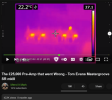
Screenshot 2025-08-11 at 18-40-38 The £25 000 Pre-Amp that went Wrong - Tom Evans Mastergroove...png
youtube.com/watch?v=-RJbpFSFziI

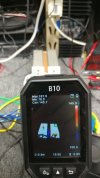
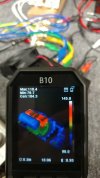
the beauty of using a thermal camera to see an issue quick and easy (tantalum cap, probably shorted).
bonus, chassis lid repair due to shipping damage.
 
douk a5 pro - 3.jpg
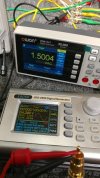
back to a5-pro testing. initially set signal generator to 1.5v rms but later adjusted to 1.8v rms so the amp could hit distortion near max volume.

douk a5 pro - 4.jpg
minus fan and its supply would be around 9w for the amp at idle
 
douk a5 pro - 5.jpg
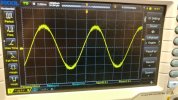
sine wave starting to get fuzzy at the peaks (31.9v rms at 8r = 127w)

douk a5 pro - 6.jpg
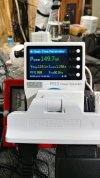
testing one channel pulls around 150w from mains (127w+9w= 136w, /150w= 90.6% efficient single channel)

advertised 300w/ch will require some number crunching/conversion.

300w p-p = 150w peak = 106w rms and if we look at max output before the sine wave gets fuzzy it will be closer to 110w. so at 0.1% distortion the final output rating will most likely be above 106w. i dont have a distortion meter but an oscilloscope is good enough to see when the output wave changes shape.
 
douk a5 pro - 7.jpg
running both channels at max before flat top distortion occurs (fuzzy wave as shown earlier)

douk a5 pro - 8.jpg
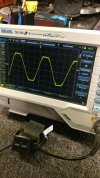
more than noticeable clipping at 35v rms (153w rms per channel) which makes things interesting for the power brick. this was not a quick "one-shot" capture on the scope, the measurement lasted a few seconds or more.

douk a5 pro - 9.jpg
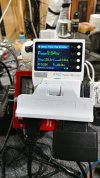
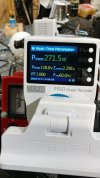
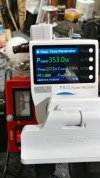
at the clipping output (sustained) the 48v 5a power mains connected power brick was giving more than 100%. interesting to note the power factor of 1.0 (100% efficiency of power consumed) and 3.0a which seems like a nice clean round number. the 117v mains is from the variac starting to sag at high current since its rated for 5a which i occasionally exceed, small diameter fuse turns into tube getter.

so the amp efficiency at clipping would be 153*2= 306, +9= 315, /353= 89% which seems a bit low but reasonably acceptable.

newer low voltage power supplies are achieving 95-98% efficiency even though amplifier designs are uniquely different and more complex circuit. should be interesting to see what innovation replaces gallium nitride (GaN) tech to reach 101% efficient and beyond. efficiency to the point of over-unity is a wonder to behold.
 
douk a5 pro - 10.jpg
test loads, pair of 8r 100w non-inductive resistors, are almost ready to boil water. a bit late in the day to put the kettle on, especially when its 95f in the shade outside.

douk a5 pro - 11.jpg
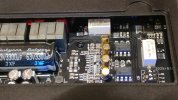
cooling fan makes a big difference when stress testing the amp. no idea how many cfm air flow is achieved when feeding a scrap 24v fan 9v but it is whisper quiet and highly effective, worth every penny to extend power cap lifespan (the large cylindrical thing next to the hot spot inductors).

definitely need a cap mode to enhance performance and longevity even further. the power brick aint gonna be happy about that.
 
douk a5 pro - 12.jpg
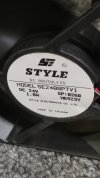
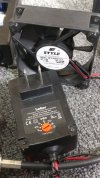
specs of the scrap cooling fan for the douk a5 pro


douk a5 pro - 13.jpg
modified variable dc supply feeding the active cooling apparatus, it has a different output tail vs stock
 
douk a5 pro - 14.jpg
its nice that the amp chassis design included a removable plastic window and there are vent holes in the sides and bottom. a cheaper knockoff of this amp omitted vent holes.

douk a5 pro - 15.jpg
63v 3300uf rubycon storage cap parked way too close to the major hot spot of the system but that can be modified. adding another cap in parallel to increase energy reserve would be easy. although testing output improvement, if any, would be a good idea. temporary test jumper connections would be best before any soldering/desoldering occurs.
 
douk a5 pro - 16.jpg
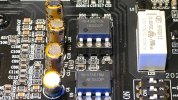
front end op-amps can be changed if a person is feeling adventurous in regards to sonic flavor


most likely hear a difference between chips when using headphones due to the uniquely different loading and chaotic impedance curves (16r/32r/64r/300r/600r/123456r...)

*general q&a about revising testing method and loads, original poster gets schooled in a few areas

*large pdf with distortion info

*amir and some measurements

*potential upgrade although some adapters will be needed plus soldering (spec comparison shopping). extremely expensive chip i.e. gonna need a fourth mortgage and a co-signer (or not).

not certain there will be enough space between the pcb sockets for a double wide adapter. need to do some measuring.
 
douk a5 pro - 17.jpg
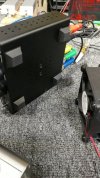
moved original rubber feet from amp to the scrap cooling fan. gave the amp a lift kit using something that was floating around in the junk collection (unused, full health adhesive). should be able to do some off-roading and the occasional fire trail.
 
6c33cb - 1.jpg
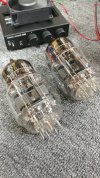
looking through the warehouse bottle collection, new/used/nos, and found this unusual pair in bubble wrap

6c33cb - 2.jpg
6c33c-b with ulyanov logo, most likely zero hours on this glassware. probably make a nice pair of mono block amps from these or something.


Back
Top Bottom