

-
Feeling lucky? Check out the AK 24th Anniversary Giveaway thread and join in the fun!
You are using an out of date browser. It may not display this or other websites correctly.
You should upgrade or use an alternative browser.
You should upgrade or use an alternative browser.
Why so few 8" inch 3 way mid size cabinets?
- Thread starter HungryEars
- Start date

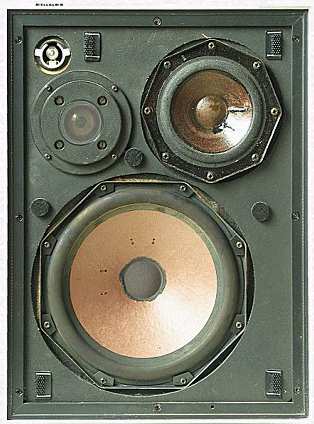
Used to own a pair of 90s. Not the most refined, but very pleasantYou make me want to get my XPL-140's out of storage! Not sure what size those would be considered, definitely not small, but 8" 3-way for sure.


toodletunes
Well-Known Member
And this illuminates another undesirable characteristic for something around that size...very unstable when on stands.
I, as well, am rather unstable when on stands.

tomlinmgt
Lunatic Member
Then I hope joining the circus wasn't on your bucket list.I, as well, am rather unstable when on stands.
I can only comment on my own experiences, but it might be pertinent to this discussion.
I started off with a 6.5"/1" 2 way system which I modified a number of times with regard to crossovers etc and they were pretty good. I then went on to a 6.5"/6.5"/1" 2.5 way design and this improved the bass response as expected. The next move was to bi-amp this system and then to send it active - Using 1 6.5" for bass duty and the other for mid only. Quite a big difference. I then replaced the bass with an 8" bass unit. Another massive change in response. Both of these systems have released a 6.5" mid/bass driver for midrange duty only.
After this I built a fully active system - 8"/6.5"/1" and it sounded very good. The latest incarnation has replaced the 6.5" mid unit for a 5" unit. Now we are really talking. The upper midrange frequencies are sharper and much more defined. A major part of this is the frequency that the each driver starts to beam. This is defined by the frequency of wavelength that matches the diameter of the driver. Above this point the sound dispersion angle becomes progressively narrower. If you can get a dispersion match between drivers at the crossover points it improves integration between the drivers. This produces a more even overall response. This beaming point foe an 8" driver is about 1KHz, 6.5" is about 1.6KHz and a 5" is about 1.9KHz. This is probably why many 3 way speakers have a 5" or 4" midrange driver in use.
I started off with a 6.5"/1" 2 way system which I modified a number of times with regard to crossovers etc and they were pretty good. I then went on to a 6.5"/6.5"/1" 2.5 way design and this improved the bass response as expected. The next move was to bi-amp this system and then to send it active - Using 1 6.5" for bass duty and the other for mid only. Quite a big difference. I then replaced the bass with an 8" bass unit. Another massive change in response. Both of these systems have released a 6.5" mid/bass driver for midrange duty only.
After this I built a fully active system - 8"/6.5"/1" and it sounded very good. The latest incarnation has replaced the 6.5" mid unit for a 5" unit. Now we are really talking. The upper midrange frequencies are sharper and much more defined. A major part of this is the frequency that the each driver starts to beam. This is defined by the frequency of wavelength that matches the diameter of the driver. Above this point the sound dispersion angle becomes progressively narrower. If you can get a dispersion match between drivers at the crossover points it improves integration between the drivers. This produces a more even overall response. This beaming point foe an 8" driver is about 1KHz, 6.5" is about 1.6KHz and a 5" is about 1.9KHz. This is probably why many 3 way speakers have a 5" or 4" midrange driver in use.

AudioGMan
Well-Known Member
Because of cost and because it’s not necessary to make an 8” three way when the woofer can also cover the upper midrange and the tweeter can go as low as 2kHz and some even lower. Adding an extra driver(midrange) and more passive crossover components adds to the final cost. Manufacturers would rather build 10”(or bigger) three way speakers. I prefer an 8” two way over an 8” three way. But there are some two ways with 10” woofers and even 12” and 15” that sound good.

Cost and market are the biggest factor. Even a 2.5 way is less costly to manufacture. This is especially true with the advent of subwoofers and smaller bookshelf speakers.
Even crossing with a low tweeter or high midbass woofer, this is solely depends on the quality of the driver and crossover. Again, that leads to cost.
I always prefer a 3-way myself. I find a lot of larger 2-way speakers have a void in the midrange where it isn't apparent in a 3-way. There are always exceptions.
Even crossing with a low tweeter or high midbass woofer, this is solely depends on the quality of the driver and crossover. Again, that leads to cost.
I always prefer a 3-way myself. I find a lot of larger 2-way speakers have a void in the midrange where it isn't apparent in a 3-way. There are always exceptions.
Last edited:

I doubt that. If there was a significant demand from consumers I'm sure there would be many more examples on offer to them.its obviously extremely wanted by consumers.

HungryEars
Well-Known Member
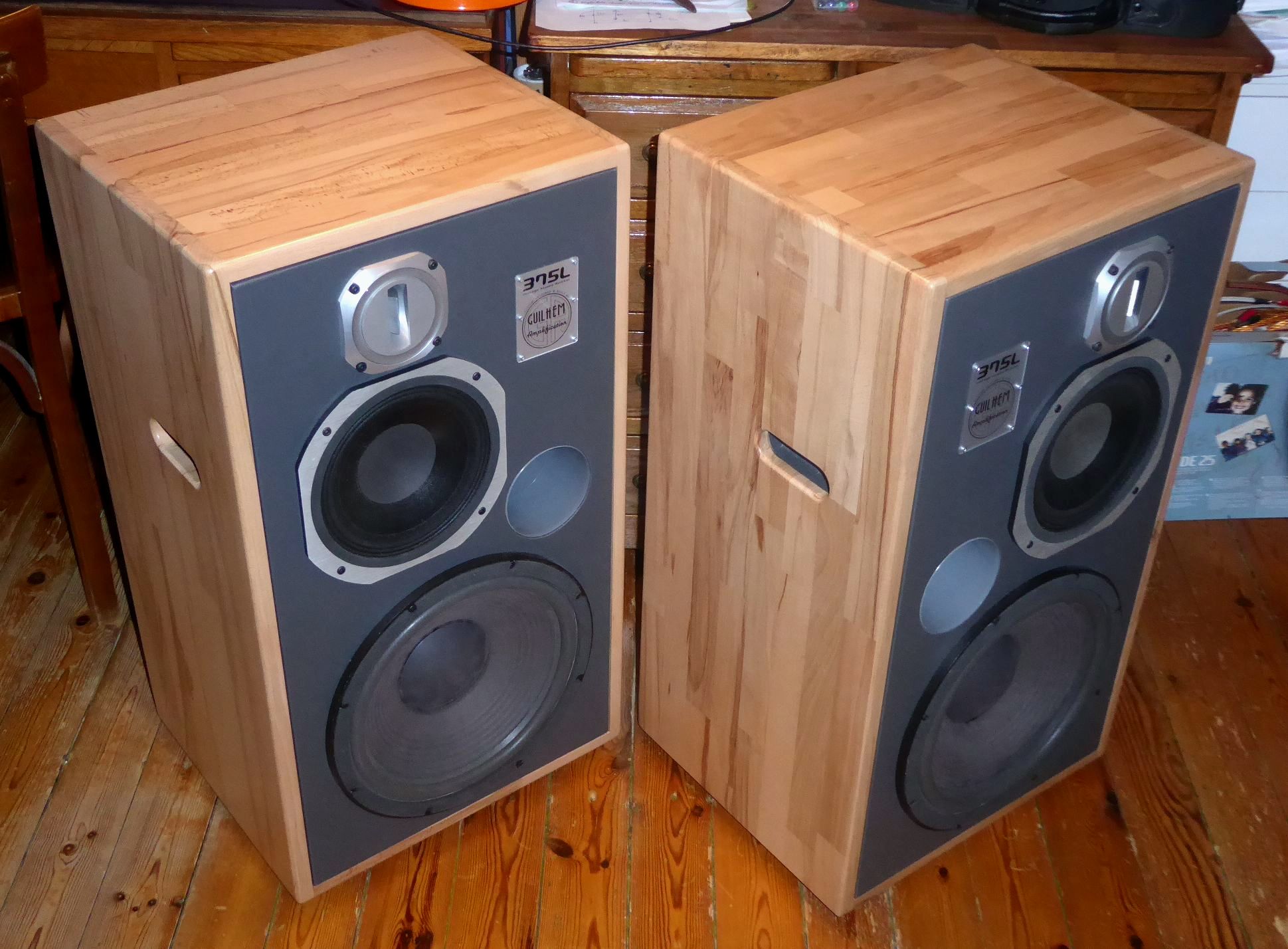
... And it's not a good idea - below I use a 8" midrange speaker :
On these ones, I used a 4" and a 5" midranges - the left one being close to your definition of a mid-sized 3-ways @HungryEars :
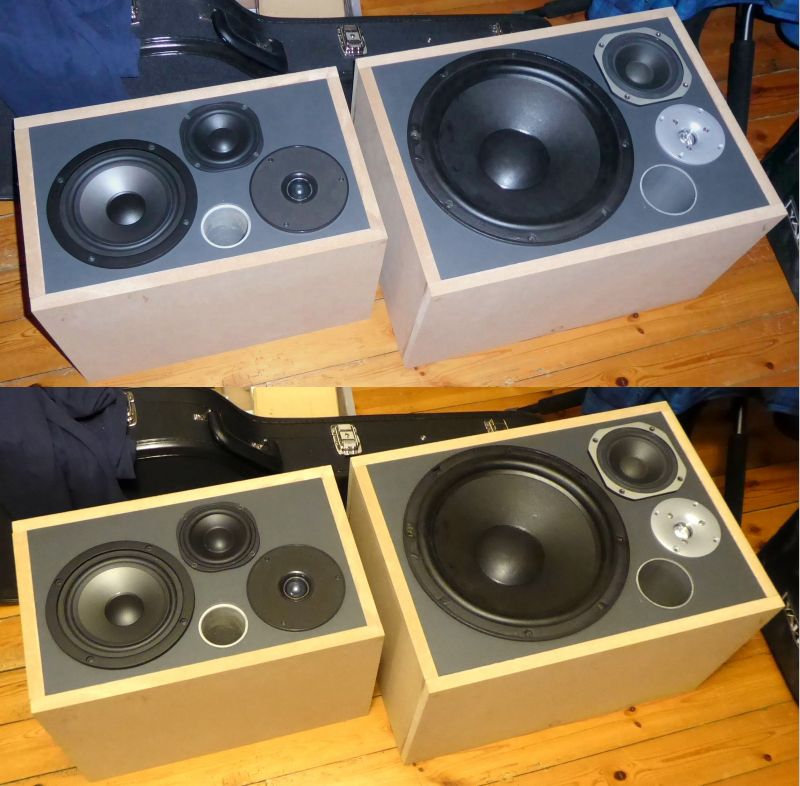
I did not go further for the moment, by lack of time and space... But the tests proved quite picky to set up (I mean searching a recipe for the Xover) with the 4" and 5" midranges, compared to the 8" option :
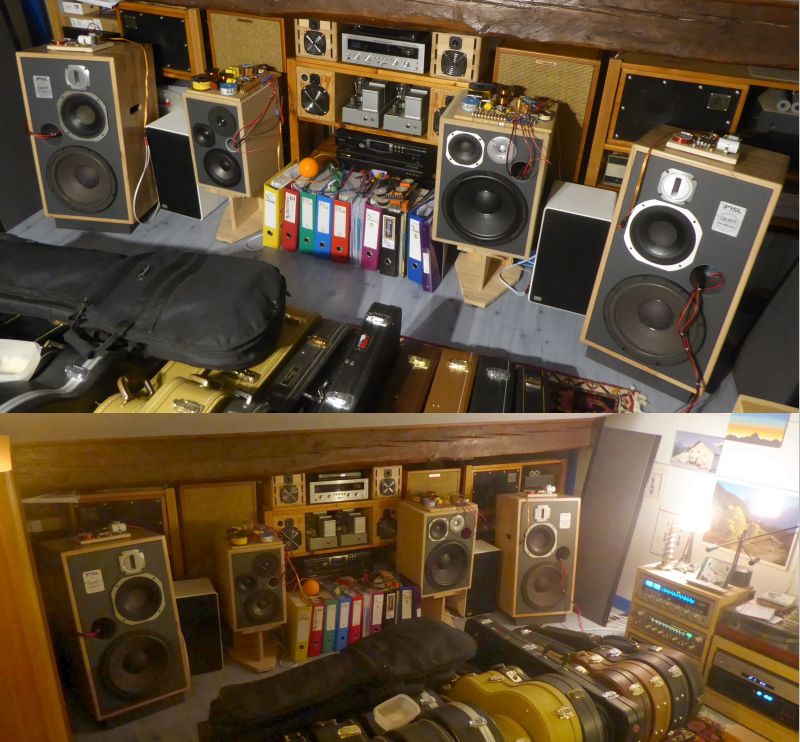
For the moment, I did not came to a satisfactory tone balance with the 4" and 5", unlike with the 8" midrange taken in reference.
Cheers,
T
The 8 needs to be almost a subwoofer. With a low crossover point. Basically a 2 way with a built in subwoofer.
Not an easy build. But an 8 inch 2 way with no mid sounds bad also.

yoder
Active Member
How about Philharmonic BMR monitors? 7” Scan-Speak version that’s pretty close to your requirements and 34 Hz extension. That version is still available in kit from Meniscus, or if you want a great finished cabinet I’m sure Salk would still make that version though the newer design is 6”. 8” version requires larger cabinet per Philharmonic, but maybe there’s another 8” driver that might work though if it were me I wouldn’t tinker with a good design. A pair for sale used on Reverb.

Very expensive even DIY, but I would like to hear these modern Alnico Seas Exotic drivers. I think Seas calls the tweeter a tweeter/midrange and the woofer also is rated for high extension. Supposedly very good midrange in the Salk Exotica 8” two-way and high sensitivity, but the woofers aren’t designed to go really deep even with larger cabinet. I would like to hear them for their midrange, not because I want a two-way monitor.

Very expensive even DIY, but I would like to hear these modern Alnico Seas Exotic drivers. I think Seas calls the tweeter a tweeter/midrange and the woofer also is rated for high extension. Supposedly very good midrange in the Salk Exotica 8” two-way and high sensitivity, but the woofers aren’t designed to go really deep even with larger cabinet. I would like to hear them for their midrange, not because I want a two-way monitor.

DogsPart2
Well-Known Member
Each speaker weighs 45llbs and sit firmly on the stand. No issues with movement at all.Really?? Are they secured to the stands somehow? Looks top heavy.
tomlinmgt
Lunatic Member
Still seems like it would be top heavy to me unless the stand is at least as heavy as the speaker, has a large base and the speaker is practically fastened to the stand.Each speaker weighs 45llbs and sit firmly on the stand. No issues with movement at all.
