

-
Please note that there are a few updates and clarifications made in the Audiokarma Rules, mostly relating to advertising and the addition of the new "Paying it Forward" & "Giving back" forums in the AudioKarma Audio Marketplace section.
You are using an out of date browser. It may not display this or other websites correctly.
You should upgrade or use an alternative browser.
You should upgrade or use an alternative browser.
Yamaha CA-800 protection relay not working
- Thread starter mikevinci
- Start date
If it should take 4 seconds, I think it's not working properly; it clicks almost instantly. It was recently replaced with a green Nichicon Muse 47uF/35v bipolar capacitor.about 4 seconds
most likely RC timing cap C715 (47/16V) is out of spec
The UES cap should be fine however a low ESR cap is preferred, Nichicon UPW or UPM(?) or...
Are +/-50 voltages on power amp boards ok
No, or at least I don't think so. Where there should be +/-50 there's +/-76.Are +/-50 voltages on power amp boards ok
And at +B and -B I have +/-46.
I'll make a note of that.The UES cap should be fine however a low ESR cap is preferred, Nichicon UPW or UPM(?) or...
Measured at the Brown and Violet wires on the power amp boardsNo, where there should be +/-50 there's +/-76.
Zener D704 has probably failed open sending high voltage to the protect circuit.
+/-76V so both rails affected, suggest basic health check of the power supply,
Shouldn't be above 60-65Vdc. Unregulated supply (+.-46V) seems ok
Measure (incircuit) F703 and F704, 47 ohms about? (amp powered off)
Measure dc voltage D706 anode then measure D706 cathode, black probe connected to any black speaker connector
MeasurementsMedido en los cables marrón y violeta de las placas del amplificador de potencia.
Es probable que el diodo Zener D704 haya fallado en circuito abierto, enviando un alto voltaje al circuito de protección.
+/-76V, por lo que ambos rieles se ven afectados, se sugiere una revisión básica del estado de la fuente de alimentación,
No debería superar los 60-65 V CC. Una fuente de alimentación no regulada (+/- 46 V) parece estar bien.
Medir (en circuito) F703 y F704, ¿aproximadamente 47 ohmios? (amplificador apagado)
Mida el voltaje de CC en el ánodo D706 y luego mida el cátodo D706; la sonda negra está conectada a cualquier conector de altavoz negro.
D706: cathode +76V, anode 0V
F703: 47Ω, F704: 47Ω
Surprised the relay kicks in... D704 failed short. More likely D706 failed openD706: cathode +76V, anode 0V
It's puzzling why the negative rail is also affected, also the +/-76V is very high (high voltage/current killed the zeners?)
Think the plan should be to sort out the +/-76V
Makes me think the regulators have failed.Where there should be +/-50 there's +/-76.
Post high resolution photo of the relay/power supply board.
Carefully measure the AC voltage between the yellow wires on the psu board
Measure AC voltage one(any) side of F703. Repeat for F704
The AC measurement between the yellow wires was 113v, and the same between the cable and F703 and F704.
I replaced C715 in the regulated power supply yesterday with a lower ESR model, but the result was the same.
Regulated power supply. Perhaps some component is incorrectly installed or the replacement is not the best.
Thank you for your opinion and interest
I replaced C715 in the regulated power supply yesterday with a lower ESR model, but the result was the same.
Regulated power supply. Perhaps some component is incorrectly installed or the replacement is not the best.
Thank you for your opinion and interest
Attachments


Check your pin-outs on these 4 TO-92 transistors
This appears to be too high by about 10%.The AC measurement between the yellow wires was 113v
The high Vac is causing the abnormally high +/- 76Vdc.
What is your mains AC supply? 230Vac?
What is the VAC printed on the rear of the unit?
Does unit have a mains AC voltage selector? Set to 230Vac?
Please post high resolution pix of transformer wires including the switched/unswitched outlet wires
Appears you have multiple issues. Schematic has TR704c at 60Vdc, allow 5Vdc across F704
I'm uploading photos of the unit. Are these the photos you asked for?Esto parece ser demasiado alto, en aproximadamente un 10%.
La alta tensión Vac está provocando una tensión anormalmente alta de +/- 76 Vcc.
¿Cuál es su suministro eléctrico de CA? ¿230V CA?
¿Qué significa VAC impreso en la parte posterior de la unidad?
¿Tiene la unidad un selector de voltaje de red CA? ¿Está configurado a 230 V CA?
Por favor, publique fotos de alta resolución de los cables del transformador, incluidos los cables de los enchufes con y sin interruptor.
Parece que tienes varios problemas. El esquema tiene TR704c a 60 Vcc, deja 5 Vcc en F704.
The input voltage at my house is 230V AC.
Attachments


Esto parece ser demasiado alto, en aproximadamente un 10%.
La alta tensión Vac está provocando una tensión anormalmente alta de +/- 76 Vcc.
¿Cuál es su suministro eléctrico de CA? ¿230V CA?
¿Qué significa VAC impreso en la parte posterior de la unidad?
¿Tiene la unidad un selector de voltaje de red CA? ¿Está configurado a 230 V CA?
Por favor, publique fotos de alta resolución de los cables del transformador, incluidos los cables de los enchufes con y sin interruptor.
Parece que tienes varios problemas. El esquema tiene TR704c a 60 Vcc, deja 5 Vcc en F704.
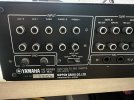
Amp is marked as 220Vac operating on nominal 230Vac, explains maybe 5%
Looks like someone has replaced the psu/relay board, solder joints could be better
Wanted a photo of the transformer (showing part number) and wires from un/switched outlets to transformer.
Need to confirm it's correctly wired for 220/230Vac
Looks like someone has replaced the psu/relay board, solder joints could be better
Wanted a photo of the transformer (showing part number) and wires from un/switched outlets to transformer.
Need to confirm it's correctly wired for 220/230Vac
Looking at photos of how these transistors were originally installed, I see that TR709 was reversed compared to how I have it now.Check your pin-outs on these 4 TO-92 transistors
I trusted the silkscreen markings printed on the board, and they are incorrect.
Could that be?
Then I have it installed incorrectly
I agree about the welding.El amperaje está marcado como 220 VCA, funcionando a 230 VCA nominales, lo que explica quizás el 5%.
Parece que alguien ha reemplazado la placa de la fuente de alimentación/relés; las soldaduras podrían estar mejor.
Solicitaba una foto del transformador (indicando el número de pieza) y de los cables que van desde los enchufes (con o sin interruptor) hasta el transformador.
Es necesario confirmar que esté correctamente cableado para 220/230 V CA.
Attachments


Wiring appears correct for 220Vac.
Brown wire from power switch joins to red then Blue and Orange Joined together.
It would be a simple matter to replumb the amp to 230Vac.
If you have a suitably rated multimeter first confirm your mains is actually 230Vac or 240Vac
For 230Vac
========
Cut Blue Orange cap off
Cap Orange wire
Cut Brown cap off
Join then cap together Blue and Brown wires
For 240Vac
========
Cut Blue Orange cap off
Cap Orange wire
Cut Green cap off
Join then cap together Blue and Green
In AU we were 240Vac (+/-7%) we are now 230Vac (+/-10%), measuring at the outlet still give 240Vac abouts
Brown wire from power switch joins to red then Blue and Orange Joined together.
It would be a simple matter to replumb the amp to 230Vac.
If you have a suitably rated multimeter first confirm your mains is actually 230Vac or 240Vac
For 230Vac
========
Cut Blue Orange cap off
Cap Orange wire
Cut Brown cap off
Join then cap together Blue and Brown wires
For 240Vac
========
Cut Blue Orange cap off
Cap Orange wire
Cut Green cap off
Join then cap together Blue and Green
In AU we were 240Vac (+/-7%) we are now 230Vac (+/-10%), measuring at the outlet still give 240Vac abouts
Will take a look at transistor orientation as pointed out by avionic.
TR709 is the switch that control the relay drive transistor TR708.
You measured 0Vdc at zener D706 anode so you should not be getting any relay click so probably an orientation issue.
You have multiple issues on that relay/power supply board. First step is to get the +/-50Vdc in order by sorting out the Vac
TR709 is the switch that control the relay drive transistor TR708.
You measured 0Vdc at zener D706 anode so you should not be getting any relay click so probably an orientation issue.
You have multiple issues on that relay/power supply board. First step is to get the +/-50Vdc in order by sorting out the Vac
I'll do that. We'll proceed to connect the 220V transformer, which is currently set to 230V, correct?Wiring appears correct for 220Vac.
Brown wire from power switch joins to red then Blue and Orange Joined together.
It would be a simple matter to replumb the amp to 230Vac.
If you have a suitably rated multimeter first confirm your mains is actually 230Vac or 240Vac
For 230Vac
========
Cut Blue Orange cap off
Cap Orange wire
Cut Brown cap off
Join then cap together Blue and Brown wires
For 240Vac
========
Cut Blue Orange cap off
Cap Orange wire
Cut Green cap off
Join then cap together Blue and Green
In AU we were 240Vac (+/-7%) we are now 230Vac (+/-10%), measuring at the outlet still give 240Vac abouts
My current voltage, just measured, is 230V AC. However, I'll double-check it with another device to be sure.
Thanks a million!