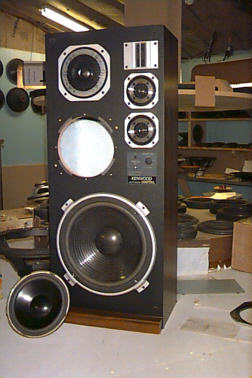
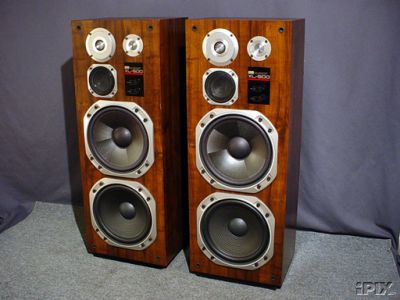
Let me start with an apology if this topic has been discussed here before. It’s about differences in Multi-way Vintage speakers and modern Multi-way speakers.
I understand that these days the low to mid price-range multi-way speakers are maximum 3-ways with 3 or max 4 drivers. While in the olden times, speakers had 6,7 or even 8 drivers and were 5-way, 6-way etc. What exactly caused this paradigm shift? Better technology? Or better understanding of the basic science behind the speaker design? Like use of T/S parameters in speaker design?
I understand all that talk about separation issues, phase issues, coherency etc (esp. when musical instrument having its output frequencies broken into so many pieces that the output does not sound at all like the actual instrument). But strangely some hi-efficiency speakers I listened to; that are 5-ways or more but still sounded very musical and coherent to me…
Some such speakers are McIntosh ML-2C, Sansui SP-Z9 etc.
Another thing is their crossover frequency selection. For eg. For McIntosh ML-2C the Crossover frequencies are: 250 Hz, 1.5kHz, 3kHz and 7kHz. So there is no 10:3.4Octave or 8:3 Octave consideration here. Why and how? Those days what was the basic consideration for crossover design? Since there were no T/S Parameters etc… What’s the basis of choosing those Xover points? I am intrigued…
I understand that these days the low to mid price-range multi-way speakers are maximum 3-ways with 3 or max 4 drivers. While in the olden times, speakers had 6,7 or even 8 drivers and were 5-way, 6-way etc. What exactly caused this paradigm shift? Better technology? Or better understanding of the basic science behind the speaker design? Like use of T/S parameters in speaker design?
I understand all that talk about separation issues, phase issues, coherency etc (esp. when musical instrument having its output frequencies broken into so many pieces that the output does not sound at all like the actual instrument). But strangely some hi-efficiency speakers I listened to; that are 5-ways or more but still sounded very musical and coherent to me…
Some such speakers are McIntosh ML-2C, Sansui SP-Z9 etc.
Another thing is their crossover frequency selection. For eg. For McIntosh ML-2C the Crossover frequencies are: 250 Hz, 1.5kHz, 3kHz and 7kHz. So there is no 10:3.4Octave or 8:3 Octave consideration here. Why and how? Those days what was the basic consideration for crossover design? Since there were no T/S Parameters etc… What’s the basis of choosing those Xover points? I am intrigued…
Last edited: