
Amp dependent. Depends on the AC voltage effect on the specific PT and the rectifier's sag — some prefer it over too-high VAC (like Eddie Van Halen).Thanks. That's easy. But how does it affect the sound?


Amp dependent. Depends on the AC voltage effect on the specific PT and the rectifier's sag — some prefer it over too-high VAC (like Eddie Van Halen).Thanks. That's easy. But how does it affect the sound?

(1) If he uses the existing 5v winding to use as a bucker he will loose the tube rectifer and have to go with SS.Yes. You can use the 12% voltage-reduction outlet on Robinette's bucking transformer.

___________________________________
"What size resistor would you add between C2 & C9? And are you recommending all those steps together, or pick and choose?"
From the diagram, a 10k-ohm resistor drops the voltage from 388 VDC to 346 VDC. "The 16@450 caps are reading 388-390V. The 8&450 are reading 346V & 303V."
That's a 42-volt drop. So, a 5k-ohm resistor between C2 and C9 should drop the voltage about 21 volts. Theoretically, dropping B+ from 388 to 367.
I'd use a 2-watt or larger metal-oxide resistor.

There you go!If you want to know what it sounds like, just dial back your variac and see for yourself.

Good advice. Thanks.The simplest solution may be to use the JJ 6V6S or to build the bucking transformer (yes, the 5Y3GT can be used with the separate bucking transformer setup).
Yes, if the 5VAC secondary taps off the current PT is used for bucking, he can't use a 5VAC tube rectifier.
Yes, if all the secondary voltage taps off the PT are high (PIV, B+, heater lines) — then they all have to be addressed. If this is the case, go with a bucking transformer. That solves all the issues without doing surgery on the amp's circuit.

Not sure it's true because I have heard many stories, but the one which makes some sense regarding EVH's "brown tone" is he would use the variac to lower the overall input voltage to the amp after over biasing the piss out of the output tubes in his Marshall 59 Superlead. This way he browned down the input section and have the output really cooking... Who really knows?Amp dependent. Depends on the AC voltage effect on the specific PT and the rectifier's sag — some prefer it over too-high VAC (like Eddie Van Halen).
I understand that techs would keep transformers lying around, for inevitable R&R.Not sure it's true because I have heard many stories, but the one which makes some sense regarding EVH's "brown tone" is he would use the variac to lower the overall input voltage to the amp after over biasing the piss out of the output tubes in his Marshall 59 Superlead. This way he browned down the input section and have the output really cooking... Who really knows?

Yes, that checks out... Also, a large supply of Sylvania 6CA7's on hand.I understand that techs would keep transformers lying around, for inevitable R&R.
Can you recommend an enclosure for this Bucking Transformer? I can figure out something but if you’ve built one with the Hammond 166N12b, then I’d appreciate your advice.
The B+ 390 VDC voltage of the Weber amp must be based on the solid-state WY3GT rectifier. It is a direct plug-in to the stock 5Y3GT socket. I have not seen a standard 5Y3GT amp supply B+ at 390 VDC — they are usually around 350-360 VDC. Of course, using a standard power transformer for a 6V6GT single-ended amp.
So, if this is the case, all he needs is to sub a 5Y3GT tube. It's worth a try. The 5Y3GT is prolly going to soften the tone. Small single-ended amps with solid-state rectification can sound sterile and compressed.
If the B+ is still too high, the PT must have PIV greater than the OEM tweed Champ or single-ended Princeton transformers.

Then, you could:
1.) Drop the B+ by adding a resistor between C2 and C9 (if this is a Weber Princeton clone amp).
2.) You can go to a larger cathode resistor (R8). Maybe try 600-ohms. I'd use a 5-watt resistor.
3.) Drop the resistance of the grid-to-ground resistor (R9) on the 6V6GT. From 220k-ohms to say 100k-ohms. I've found that you need to make significant changes to the G2G resistor to affect the idle bias.
4.) Run a bucking transformer.
View attachment 3650179
From the man, himself. Rob is an interesting guy. Ex-Army Copper and USAAF F-15 jockey. He has a Honda S2000 and Miata site, too!Can you recommend an enclosure for this Bucking Transformer? I can figure out something but if you’ve built one with the Hammond 166N12b, then I’d appreciate your advice.
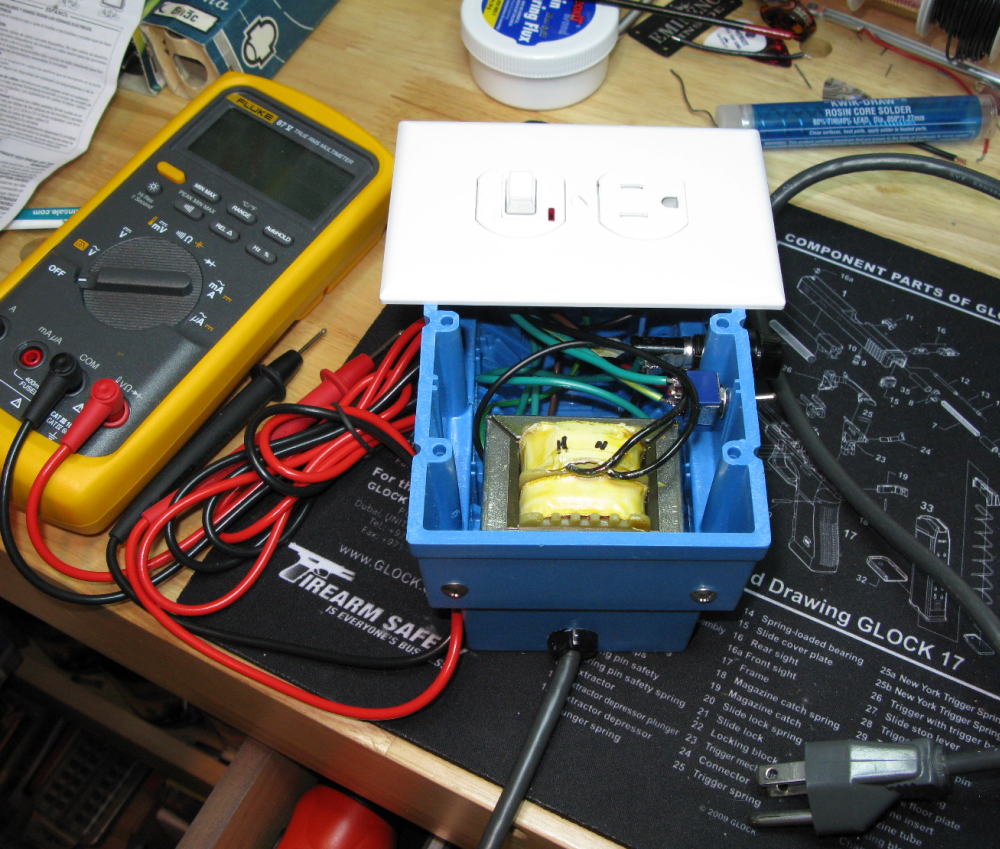
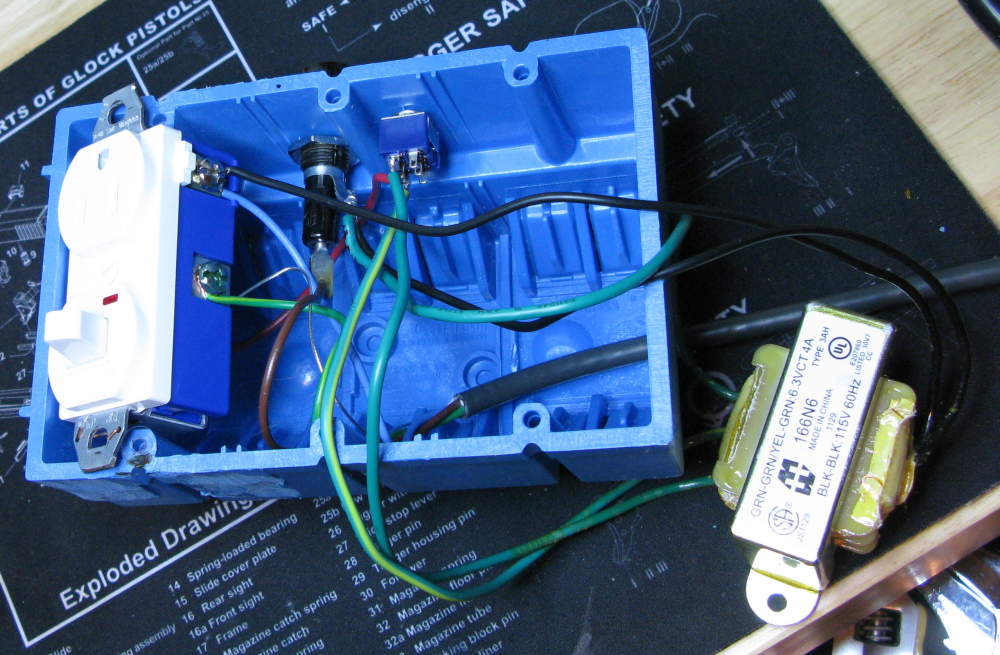
I'm using neither. I do not have a bucking transformer. The 166N12B will drop the outlet voltage 12%. That's the one I would use.Thanks! So the box doesnt have to be metal? And you’re using a 166n6 and not a 166N12B?

That power transformer`s modern enough design age "should" put it`s secondaries voltage values well within the desired voltages when its secondaries are properly loaded.The transformer was built for this circuit. It's 10 or 15 years old.
thank you!That power transformer`s modern enough design age "should" put it`s secondaries voltage values well within the desired voltages when its secondaries are properly loaded.
IMO/E, I would just either try to substitute a properly selected rectifier tube type, whose filament current draw might pull down the overall voltages enough to bring the circuits voltages in line with the desired values, or just select a thermistor value type that when inserted into the primary drops all power transformer secondaries closer to desired spec, with still using the plugin SS rectification, or even utilize both the rectifier tube and thermistor together, though that might make the little amp`s dynamics too spongy, only way is to empirically try either or both.
Prolly need to know the specific model of that transformer. It may be designed for a push-pull 6V6GT circuit?That power transformer`s modern enough design age "should" put it`s secondaries voltage values well within the desired voltages when its secondaries are properly loaded.
That`s what I understood reading articles in Vintage Guitar rag in the nineties, Edie "browned out" his Marshal`s overall voltages via a variac.Not sure it's true because I have heard many stories, but the one which makes some sense regarding EVH's "brown tone" is he would use the variac to lower the overall input voltage to the amp after over biasing the piss out of the output tubes in his Marshall 59 Superlead. This way he browned down the input section and have the output really cooking... Who really knows?
That`s true, Steve, but I was "assuming" the selected PT was design specific to that particular amp`s circuit`s power/loading requirements !Prolly need to know the specific model of that transformer. It may be designed for a push-pull 6V6GT circuit?
The History of Marshall is a nice book that covers this and other tidbits of Marshall history.That`s what I understood reading articles in Vintage Guitar rag in the nineties, Edie "browned out" his Marshal`s overall voltages via a variac.
Starved it down to a level that gave him the desired "Brown sound/tone".
Push-pull trannies could be made for Class AB1 outputs. They tend to run higher plate voltages than single-ended.That`s true, Steve, but I was "assuming" the selected PT was design specific to that particular amp`s circuit`s power/loading requirements !
And I`m pretty sure a PP 6V6 rated PT would be at least physically larger that the 6V6 single ended chassis` punched out PT`s opening would accommodate without metal removal !

